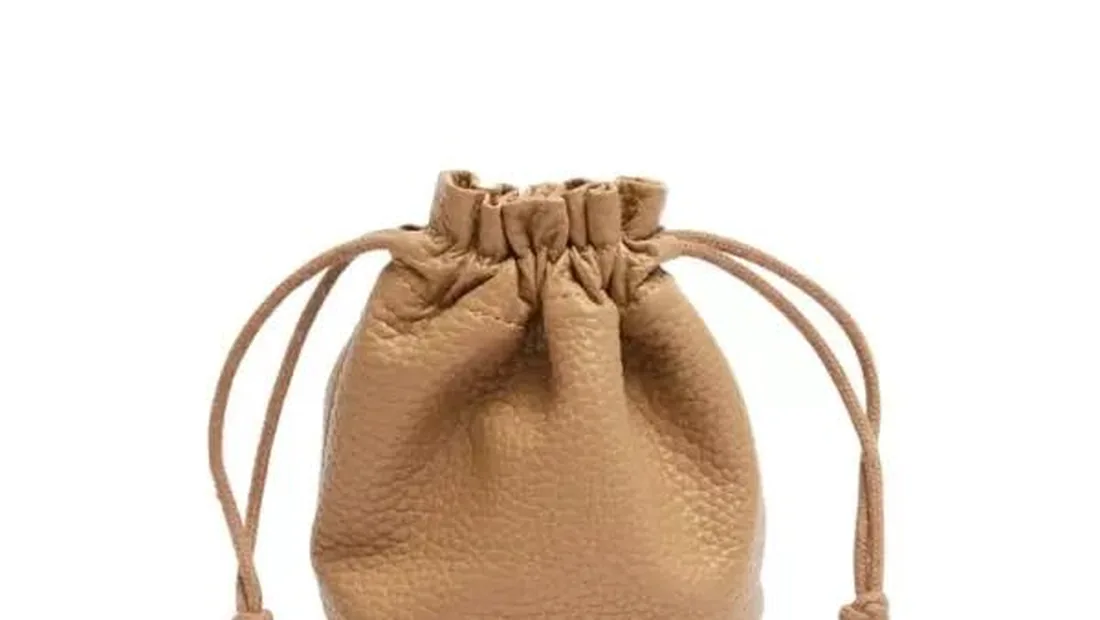
A drawstring bag closes one way. A cord runs through a casing or an eyelet, you pull it, and the fabric bunches around the opening. That is the whole mechanism. Everything else changes with the brief: a palm-sized jewellery pouch, a dust bag for leather goods, a cinch sack on someone's back, a laundry sack in a dorm closet.
Most spec sheets treat the drawstring backpack as its own species. Fair enough, but a buyer sourcing pouches and dust bags solves the same problems: fabric, cord, channel, decoration. This guide covers the family together.
What counts as a drawstring bag? The whole family in one place
Start with the closure. A cord passes through a channel or a reinforced hole, and pulling it gathers the fabric. No zipper, no buckle, no hook-and-loop flap. That is the only thing every member shares.
From there, the family splits into types you will recognise.
- Small pouch. A compact drawstring bag for jewellery, coins, small hardware or promotional giveaways.
- Gift or dust bag. A soft bag that wraps a product for presentation or protects it in storage.
- Cinch sack. The mid-size workhorse, often worn on the back with two cords doubling as shoulder straps.
- Laundry bag. A larger bag for soiled clothing, frequently with a coated or moisture-resistant liner.
- Shoe bag. A vented or lightweight bag that separates footwear from the rest of a load.
- Produce bag. An open-weave or mesh bag for fruit and vegetables, sometimes reusable at retail.
- Storage bag. A structured bag for bedding, seasonal clothing or equipment.
So when a buyer asks what a drawstring bag is called, the name depends on the job. Cinch sack, stuff sack, ditty bag, dust bag, laundry bag. Same closure, different brief.
Fabric choices: cotton, polyester, nylon, non-woven, mesh and velvet
Fabric decides how a drawstring bag feels in the hand and how long it survives. Match the material to the job before you fall in love with a colour.
What each material does well
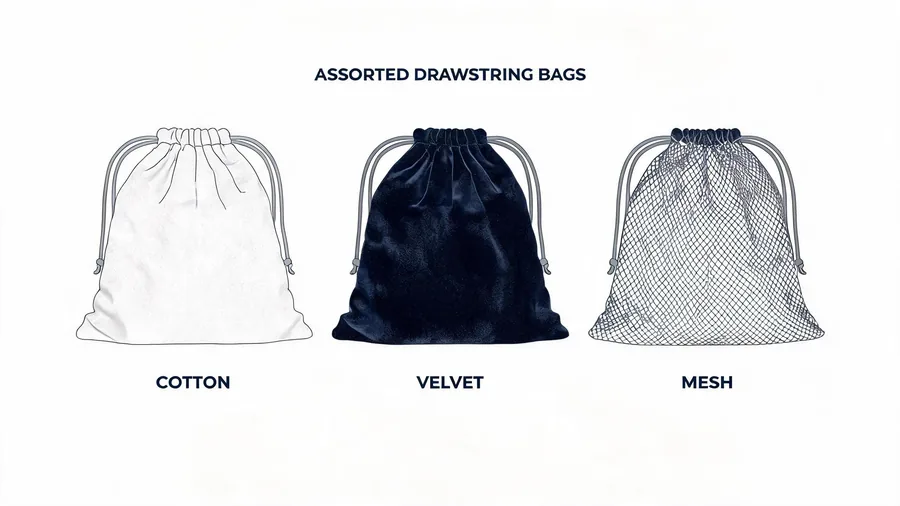
Polyester is dimensionally stable, widely printable, and available in many weights, weaves, coatings and recycled-content options. That combination makes it the default for promotional cinch sacks. Nylon brings high strength-to-weight performance and good abrasion resistance, though coating and weave affect water resistance far more than the fibre name. Canvas is chosen for structure and texture. Mesh is an open structure, useful for ventilation, visibility and stretch pockets. Non-woven fabric is a bonded sheet rather than a woven one, which is why it suits low-cost liners, backing and reinforcement. Velvet and soft cotton belong with gift and dust bags, where hand feel matters more than tear strength.
Denier and GSM, in plain terms
Two specification terms cause more confusion than any others.
Denier is a yarn linear-density unit. It describes the yarn, not the finished cloth, so a higher denier does not by itself guarantee a stronger bag. Weave, coating and construction all have a say. GSM means grams per square metre, a measure of mass per area. Read them together and you get a rough picture. Read either alone and you get a sales claim.
Matching material to purpose
Say a brand needs a dust bag for leather goods. Soft cotton or velvet reads as premium and will not scuff the product. Now imagine a grocery chain ordering produce bags: mesh or a lightweight woven fabric gives airflow and shows the contents. A gym brand sourcing laundry bags wants coated nylon or polyester, because damp kit needs a wipe-clean surface. None of these briefs is interchangeable, and the fabric choice is where the cost sits.
Single or double drawstring, and what the cord hardware does
Here is the difference most listings ignore.
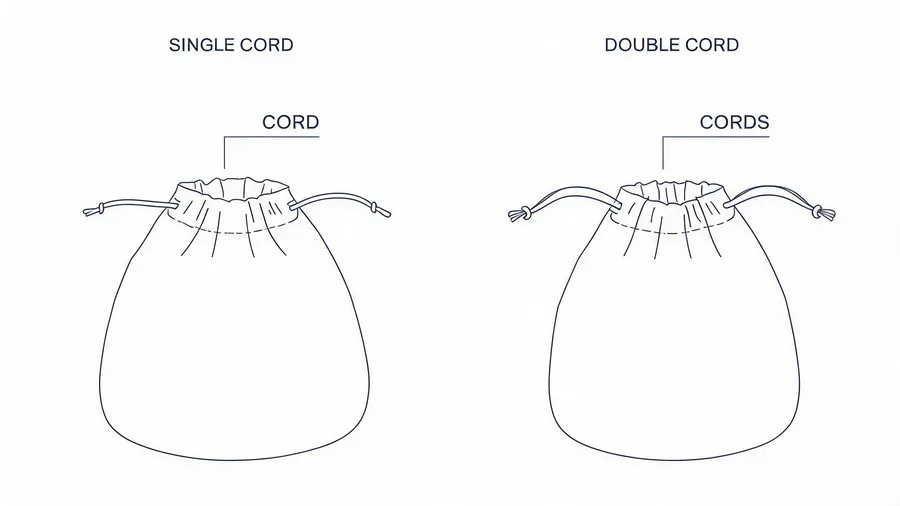
A single-drawstring build uses one cord running through the casing. Pull it and the whole opening gathers from one direction. A double-drawstring build uses two cords, usually exiting on opposite sides. Pull both and the opening gathers from two directions at once, which closes faster and pulls more evenly. On a cinch sack, those same two cords continue down the sides and double as carry loops. That is the whole trick behind the backpack-style sack.
Cord ends get overlooked too. A knot is the cheapest finish and the least durable. An aglet, the small sheath on the cord tip, stops fraying and makes the cord easier to thread. A cord lock is a spring or friction device that holds the drawcord at an adjusted position. Treat it as a convenience part, not a strength part. Match it to cord diameter, or it will slip under load and the buyer will blame the bag.
Channel construction, grommets and stitched openings
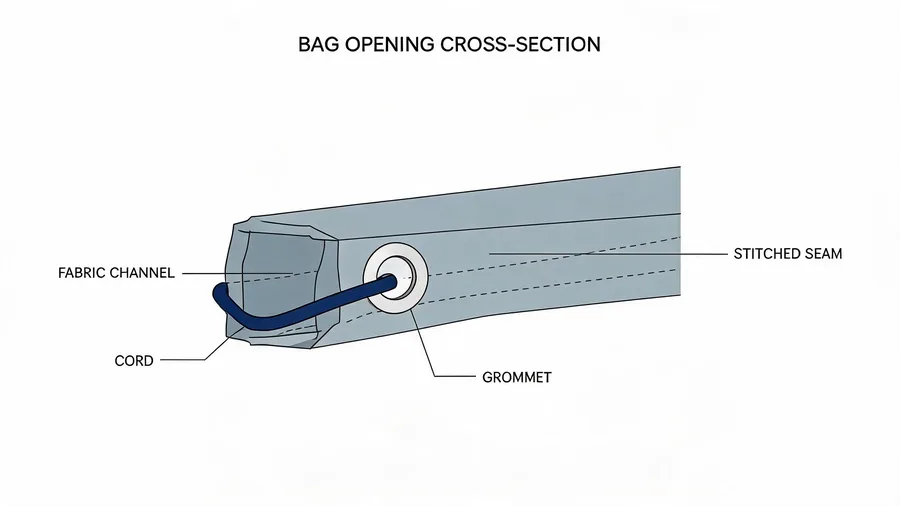
The casing, sometimes called the channel, is a folded and stitched strip of fabric that the cord runs through. Simple idea, serious consequences. The stitching line sets how much fabric gathers and where the stress lands when someone yanks the cord.
Two opening styles dominate.
A stitched channel folds the top edge over and sews it down. It is clean, cheap to produce, and works well on light and medium bags. The weakness is wear at the cord exit points, where the cord rubs the same few millimetres of fabric every time the bag opens.
A grommet opening takes a different route. A grommet is a reinforced ring fitted into a hole, used for drainage, ventilation or cord routing. Because the ring carries the abrasion instead of the cloth, an eyelet opening usually outlasts a stitched channel where a bag is opened and closed hard and often. It also lets a user replace a worn cord without seam work.
Whichever you choose, reinforcement at the cord exit is what stops the fabric tearing first. A small patch, a bar tack, or a doubled layer of shell material at that point costs very little and prevents the most common field failure on any drawstring bag.
A table mapping bag type to fabric, closure and typical use
Use this as a starting point for a spec conversation, not a final answer. Real briefs bend these lines all the time.
| Bag type | Fabric | Closure style | Cord hardware | Typical use |
|---|---|---|---|---|
| Small pouch | Cotton, velvet, non-woven | Single drawstring, stitched channel | Knot or short aglet | Jewellery, coins, small gifts, promos |
| Gift or dust bag | Soft cotton, velvet, satin-finish polyester | Single drawstring, stitched channel | Knotted cord, sometimes a ribbon | Retail packaging, product protection in storage |
| Cinch sack | Polyester, nylon, canvas | Double drawstring forming carry loops | Cord lock or knot at each end | Promotional carry bag, gym kit, day use |
| Laundry bag | Coated polyester or nylon, canvas | Single or double, grommet opening | Cord lock | Dorm and travel laundry, damp items |
| Shoe bag | Lightweight nylon, non-woven, mesh panel | Single drawstring | Knot or aglet | Separating footwear and dirty kit in a larger bag |
| Produce bag | Mesh, lightweight cotton, rPET | Single drawstring, grommet or stitched | Simple knot, sometimes a toggle | Fruit and vegetables, reusable grocery use |
| Storage bag | Canvas, heavy polyester, coated shell | Double drawstring, reinforced channel | Cord lock | Bedding, seasonal clothing, equipment |
Notice what the table does not contain: prices. Cost moves with fabric weight, decoration and order structure, so it belongs in a quote, not a chart.
Printing, labelling and decoration on a drawstring bag
Decoration routes fall into two groups, and the split matters for artwork.
Applied decoration sits on the fabric surface: screen printing, heat-transfer or DTF film. These need a vector or high-resolution file and a colour reference, and coverage area drives cost. Sewn-on parts are different. A woven label or a metal badge is stitched to the bag, so it needs its own artwork, its own dimensions and its own placement callout. Embroidery sits in between and needs digitising.
Then there is the labelling a retail buyer will ask about: a sewn-in care label and a fibre-content label. These are part of the spec pack, not an afterthought. Fibre content must match what is actually in the bag, and care instructions must match how the fabric behaves. For US retail, the FTC governs textile labelling and care claims. For the EU, check the current text of the applicable regulation before you print anything. Name the standard in your spec and let the compliance team confirm it. No factory should tell you a bag is certified to a labelling rule, because that is not what those rules certify.
Specs to send before you ask for a quote
Vague briefs get vague quotes. Send these items and the conversation gets shorter and cheaper.
- Bag type and intended use
- Finished size, flat or filled
- Fabric and weight, plus any coating requirement
- Cord type, diameter and end finish
- Opening construction: stitched channel or grommet
- Decoration method, artwork and placement
- Label and care artwork, if the bag goes to retail
- Packing method and how the bags ship
MOQ and lead time depend on fabric, decoration and structure, so they are confirmed per project rather than quoted as one blanket number. A pouch in stock cotton and a coated storage bag with a grommet opening are not the same order.
When your spec is ready, send it through for a quote and the details get matched to the right construction.
Frequently Asked Questions
What is a drawstring bag called?
The name usually follows the job. Cinch sack, stuff sack, dust bag, laundry bag, ditty bag and shoe bag all describe drawstring bags. The shared feature is the closure: a cord running through a casing or eyelet that gathers the opening when pulled. If someone uses the term generically, they are usually talking about a mid-size carry sack, but the category is wider than that.
What is a drawstring bag for?
It depends on the build. Small pouches hold jewellery or promotional items. Dust bags protect and present retail products. Cinch sacks carry gym kit or daily essentials on the back. Laundry and shoe bags separate dirty items from clean ones. Produce bags hold fruit and vegetables, and storage bags hold bedding or seasonal clothing. The closure is the same in all of them, the job is not.
What are the differences between a cinch bag and a drawstring bag?
A cinch bag is one type of drawstring bag, not a synonym for the whole group. The distinguishing feature is usually the double drawstring: two cords run through the casing and continue down the sides to form carry loops, so the sack can be worn on the back. A single-drawstring pouch or dust bag gathers from one direction and is carried by hand or stored. Same closure principle, different use case.
What should a spec sheet for a custom drawstring bag include?
List the bag type and intended use, the finished size, the fabric and its weight or GSM, any coating, the cord type and end finish, and whether the opening is a stitched channel or a grommet. Add the decoration method with artwork and placement, any sewn-in care or fibre-content label, and the packing method. With those details, a supplier can confirm material and structure without a round of guesswork.