Cooler Bag Manufacturer
Insulated totes, lunch bags and backpack coolers engineered around measurable thermal performance, not marketing claims.
Overview
We manufacture promotional cooler bags and insulated carriers with a documented thermal stack: closed-cell foam cores, aluminum PET radiant barriers and waterproof shells. That means you can put real numbers in your spec sheet instead of adjectives.
Programs range from grocery-run lunch totes to insulated delivery backpacks, all built on the same BSCI-certified lines as our other categories.
Representative styles
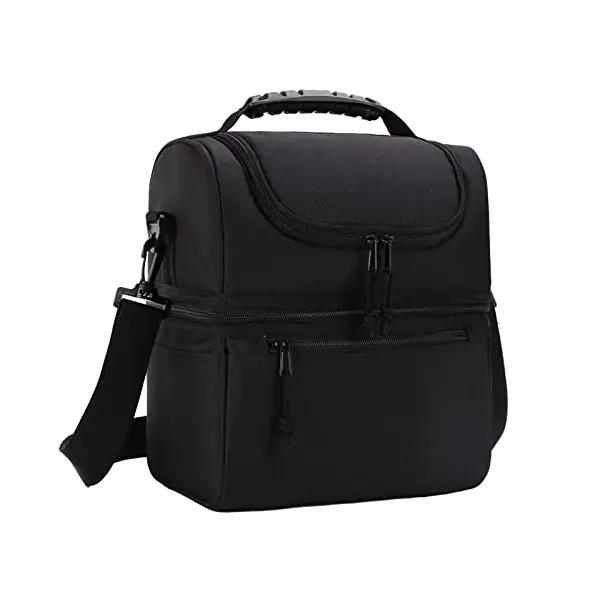
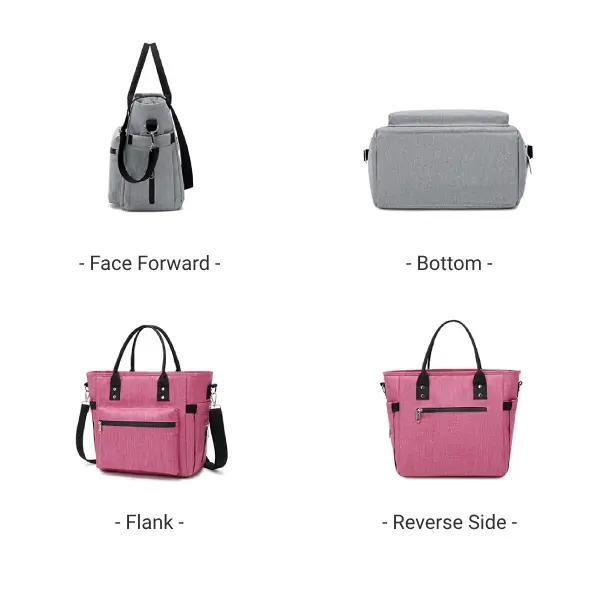
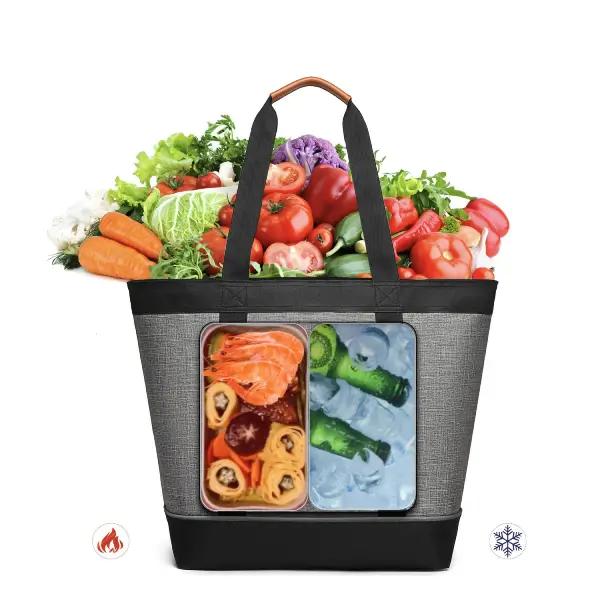
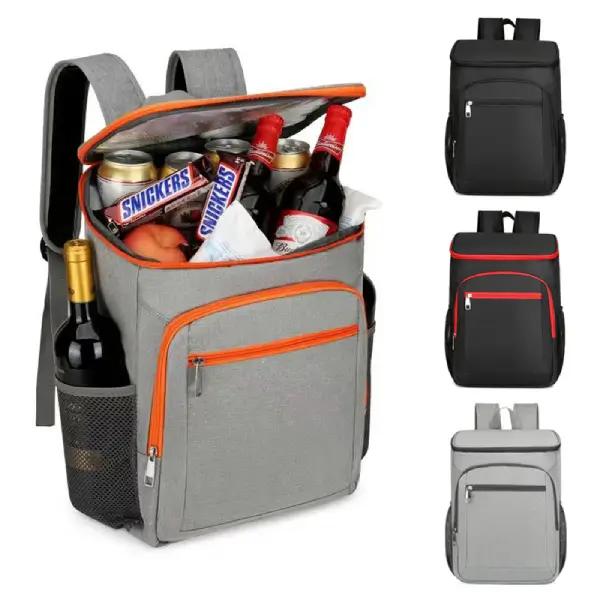
Shown styles are from our production lines; every program is built to your design, materials and branding.
Specifications
| Insulation core | Closed-cell PE / XPE / EVA foam, 8-15 mm thick, roughly R-2.5 to R-4 per inch |
|---|---|
| Radiant barrier | Aluminum PET liner cuts radiant heat gain by about 50% and extends cold retention 10-20% |
| Waterproofing | PU/PVC coatings rated 3000 mm+; TPU lamination 10,000 mm+; heat-welded seams and waterproof zippers available |
| Shell fabrics | 600D / 1200D polyester, Oxford weaves, rPET options |
MOQ and lead times
| MOQ | 500 pcs per style; Pantone-matched single color from 200 pcs |
|---|---|
| Sampling | 1-10 days, paid samples; one revision round in 2-3 days |
| Production | 7-15 days for fully custom orders |
| Rush options | +20% fee cuts lead time 30%; +30% cuts 50%; +40% cuts 70% |
| Shipping | Sea, rail or air; courier door to door in 5-7 working days for small lots; sea freight 40-45 days |
Go deeper
For the complete insulated range including delivery and medical-style carriers, visit our dedicated cooler site, coolerbagsupplier.com.
Materials and construction options for cooler bags
Cooler bag suppliers do not all build the same way. The performance difference comes from the layer stack, and buyers comparing factories should ask what sits between the outer shell and the inner liner. A cooler bag is a system. The outer shell takes abrasion, appearance, and the first hit of weather. The insulation layer slows conductive and convective heat transfer. A reflective barrier, when positioned correctly, can reduce radiant heat transfer. The inner liner provides a cleanable interior and may contain liquid. The closure controls air exchange at the opening. Skip any one of these and the bag fails in a specific, predictable way.
Insulation thickness, cell structure, density, and continuity all influence heat-transfer resistance. Closed-cell polyethylene foam is common because it resists moisture and holds its shape. Polyurethane foam can offer different compression and density profiles. Thermal bridges occur where insulation is compressed, interrupted, or replaced by conductive hardware. A zipper sewn through the full wall stack creates exactly that kind of bridge. So does a hard plastic bottom board with no insulation under it. Buyers who compare samples should cut one open. Look at whether the foam runs continuously into the corners or stops short where the seams fold.
Opening frequency and zipper gaps can dominate real-use temperature loss even when wall insulation is effective. A smaller air volume and a fuller load generally reduce rapid internal temperature fluctuation. Pre-chilled contents and correctly conditioned refrigerant packs improve cold-hold duration. Condensation control requires a liner and seam design that can manage moisture without damaging insulation. These are not optional details. They are the difference between a bag that holds cold for a work shift and one that fails by lunch.
| Material choice | What it is good for | Where it fails |
|---|---|---|
| Closed-cell PE foam, 8, 15 mm | General lunch bags, delivery bags, everyday insulated totes; resists moisture, recovers after compression | Thicker sheets add bulk and fold poorly at sharp corners; can create stiff seams if not skived |
| Polyurethane foam | Softer hand, higher loft for thicker walls, good for premium soft-sided coolers | Can absorb moisture if the liner leaks; density varies more between suppliers; thermal performance drops when compressed |
| Aluminum PET reflective liner | Reduces radiant heat transfer when correctly positioned; adds a clean, bright interior look | Does not replace insulation; performance drops if the reflective surface is glued directly to the outer shell with no air gap or foam layer |
| PEVA or TPU inner liner | Cleanable, resists liquid, helps with condensation management; TPU offers better flex at low temperatures | PEVA can crack in very cold conditions; TPU costs more and requires careful welding |
| Heat-welded seams | Creates a liquid-tight interior for leak-prone contents; reduces stitching holes through the liner | Welding requires compatible materials and tooling; a stitched seam through a welded liner destroys the barrier |
Closure choice changes everything. Zippers are fast but leak air at the teeth. Roll-top closures seal better but are slower to open. Overlapping flaps sit between them. A buyer who specifies a roll-top for a delivery bag gets a different product than one who specifies a zipper for a lunch bag. The closure is part of the thermal system, not just a convenience feature. Ask your cooler bag manufacturer how the closure is sealed at the ends, because that is where leaks start.
How buyers in different situations should specify this product
Say a buyer is sourcing promotional cooler bags for a beverage brand. The bag will be given away at events, filled with cans, and used maybe ten times. This buyer should not pay for a welded liner. A simple closed-cell foam wall with a PEVA liner and a standard zipper will do. The specification decisions that matter are print area, color matching, and the outer fabric's abrasion resistance. A cheap polyester shell that pills after one picnic makes the brand look bad. This buyer should specify a 600D polyester outer, not because it insulates better, but because it survives handling. The MOQ conversation should center on logo process, not thermal testing.
Now consider a buyer building a meal-prep delivery service. Insulated bags go out every day, come back dirty, and get wiped down. Contents arrive cold or the customer complains. This buyer needs to specify condensation control, liner cleanability, and a closure that survives hundreds of cycles. A stitched-in PEVA liner may separate at the seams after repeated wiping. A welded liner costs more but lasts. The buyer should ask the cooler bag manufacturer for a condensation test report and a zipper cycling test. The thermal claim must state the test method, ambient condition, starting temperature, load, refrigerant quantity, and acceptance limit. Without that, a hold time number means nothing.
A third buyer might be developing a premium outdoor brand. The cooler bag sits in a kayak or on a tailgate. It gets dropped, rained on, and left in the sun. This buyer should specify a TPU-laminated outer, a roll-top or heavy-gauge zipper, and closed-cell foam that does not absorb water. Pre-chilled contents and conditioned refrigerant packs are part of the user instructions, but the bag itself must handle moisture without the insulation degrading. Corrosion resistance matters on zipper pulls and D-rings. A buyer who skips that test gets rust streaks on a $120 cooler after one season. The specification decisions here are about material compatibility, not just thickness.
These three buyers need different bags. What they share is the need to specify the complete construction, not just the fabric. A cooler bag supplier who asks about payload, use frequency, and cleaning method is more useful than one who quotes a price from a photo. The conversation should start with how the bag will be used, then move to the layer stack.
Customization that changes tooling, cost or lead time, versus customization that does not
Some changes are free. Others require new tooling and push the schedule. Buyers who know the difference can avoid surprises. Changing the outer fabric color from a supplier's stock range usually costs nothing if the fabric is available. Adding a screen-printed logo on a flat panel is a standard operation. Changing the zipper pull color, adding a woven label, or switching the webbing color are all low-impact changes. These do not change the cutting pattern or the assembly sequence.
Changes that alter the pattern cost more. Moving a pocket, changing the bag's depth, or adding a divider means a new cutting die or a revised pattern. A buyer who changes the closure from a zipper to a roll-top has just changed the entire top panel construction. That is not a color swap. It is a redesign. The factory must re-cut samples, re-test the closure, and possibly re-weld the liner. Lead time moves. A buyer who changes the insulation thickness from 8 mm to 15 mm may need new seam allowances because the wall stack gets thicker. The cutting die for the outer shell might still work, but the assembly jig may not.
Tooling is the real cost driver. A custom zipper pull with a brand logo requires a mold. A custom plastic buckle or D-ring requires a mold. A custom rubber badge or embossed logo plate requires a mold. These molds have a one-time cost and a lead time of their own. A buyer who wants a custom-shaped cooler bag, not a standard rectangle, needs a full set of cutting dies. That is the most expensive customization on this product. The factory cannot fold a die-cut panel into a complex curve without a new die for every panel.
What does not change tooling? Logo placement, label style, packaging options, and color combinations from existing materials. A buyer who sticks to the factory's standard shapes and hardware can move fast. A buyer who wants a unique shape should expect a longer sampling phase and a higher setup cost. The honest cooler bag manufacturer will say so before the quote, not after the deposit. Ask which changes require a new die, which require a new mold, and which only require a new purchase order. The answer tells you how the factory thinks about cost.
What to check before approving production for cooler bags
Approving production means approving a specific construction, not a photo. The first check is the layer stack. Cut a pre-production sample open and look at the insulation. Is it continuous? Does it run into the corners or stop short? Is the reflective barrier facing the right direction? A metallized film glued to the outer shell with no foam behind it does almost nothing. The reflective layer must sit inside the insulation or on the inner side of the foam to reduce radiant heat transfer. If the factory cannot show you a cross-section, ask for one.
Thermal testing is the second check. A cooler bag thermal test requires a defined payload, refrigerant quantity, starting temperature, and ambient profile. The internal temperature is logged over time. The acceptance limit must be stated. A claim like "holds cold for 8 hours" without these conditions is not a claim. It is a guess. Buyers should ask for the thermal profile and the pass criterion. If the factory has never run this test, that is useful information. It means the performance claim is unverified. Some cooler bag suppliers will run a thermal test on request for a pre-production sample. That is the right time to do it, before the full run.
Condensation is the third check. A cold-loaded bag will collect moisture. The condensation test evaluates internal pooling, seam leakage, exterior moisture, and insulation damage. A liner that traps water against the foam shortens the bag's life. A welded seam that leaks under condensation is worse than no weld at all. Ask how the liner is attached and whether the seams are sealed. Wipe the interior with a damp cloth, then with a wet one. Check for seepage at the corners. This is a five-minute test that reveals a lot.
Finally, check the closure and the hardware. Zipper cycling tests open and close the zipper repeatedly to evaluate operating force and durability. Buckle and adjuster strength tests measure break strength and slippage under load. Corrosion resistance tests evaluate metal-finish stability under moisture or salt exposure. A cooler bag used outdoors will see all three. A buyer who approves production without these checks is approving a prototype, not a product. The reference also warns against converting a material test result into a finished-product claim. A fabric that passes a water-resistance test does not make the bag waterproof. The complete construction, including seams and closures, must meet the stated test conditions. Use water-resistant only when the material or product has passed a defined method. Use waterproof only when the complete construction passes. Use leakproof only when the complete product passes a liquid-containment test. These words have specific meanings in quality control, and a careful buyer uses them precisely.
For buyers expanding into adjacent categories, the same discipline applies. A diaper bag with an insulated bottle pocket needs the same layer-stack scrutiny. A garment bag that holds damp clothing has condensation risks of its own. The OEM process we run for cooler bags follows the same sampling and approval gates as every other category. If you are comparing cooler bag suppliers, bring this checklist to the conversation. The factory that can answer these questions is the one that can build your product.
FAQ
What insulation do you use in cooler bags?
Closed-cell PE, XPE or EVA foam cores 8-15 mm thick, rated roughly R-2.5 to R-4 per inch, with optional aluminum PET liners that cut radiant heat gain by about 50%.
What is the MOQ for custom cooler bags?
500 pieces per style, with Pantone-matched single-color runs from 200 pieces.
How watertight are the linings?
Standard PU/PVC coatings are rated 3000 mm+ hydrostatic head; TPU lamination reaches 10,000 mm+ and can be paired with heat-welded seams and waterproof zippers.
How fast can you produce?
Custom cooler bag orders run 7-15 days after sample approval; rush surcharges can cut lead time by up to 70%.