Drawstring Bag Manufacturer
Cinch pouches, dust bags and drawstring carriers, from promotional canvas to genuine leather.
Overview
Drawstring bags run from giveaway pouches to premium leather carriers, and we produce across that whole range. Canvas and nylon cinch bags suit promotional and packaging programs; structured rounds and leather drawstring shoulder bags serve fashion lines.
Because the construction is simple, this is also the fastest category to sample: most pouches are ready for approval within days.
Representative styles
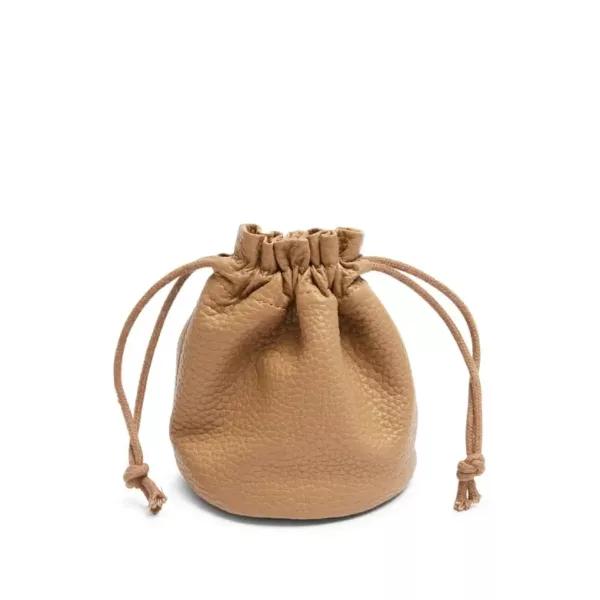
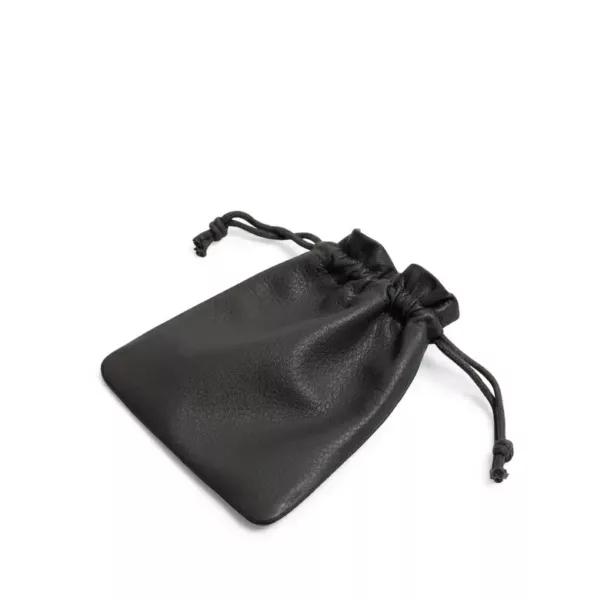

Shown styles are from our production lines; every program is built to your design, materials and branding.
MOQ and lead times
| MOQ | Low MOQs, contact us |
|---|---|
| Sampling | 1-10 days, paid samples; one revision round in 2-3 days |
| Production | confirmed per order; sampling 1-10 days |
| Rush options | +20% fee cuts lead time 30%; +30% cuts 50%; +40% cuts 70% |
| Shipping | Sea, rail or air; courier door to door in 5-7 working days for small lots; sea freight 40-45 days |
Materials and construction options for drawstring bags
A drawstring bag manufacturer starts with the shell fabric because it decides almost everything else: drape, print quality, wash behavior, and how the bag fails. Say a buyer orders 5,000 promotional drawstring bags for a trade show. The first question is not the logo size. It is whether the bag will be carried for three hours or three years. That answer points to a fabric family before a single cut is made.
Polyester and nylon dominate lightweight promotional work. They take print well, they resist tearing at the eyelet, and they pack flat for freight. Cotton canvas and cotton duck sit at the other end. They feel substantial in the hand, they hold heavier loads without stretching, and they age in a way that synthetic film prints cannot match. The reference material is clear that each choice trades something away. Polyester is dimensionally stable but can feel thin. Nylon has high strength-to-weight but its coating and weave decide the water story. Canvas brings structure and texture but costs more to ship and takes longer to dry.
The comparison below is what a sourcing manager actually weighs. It is not about what a fabric is. It is about where each one earns its place and where it becomes the wrong call.
| Material | Good for | Where it fails |
|---|---|---|
| Polyester fabric | Full-color printed promotional bags, bulk runs, consistent flat lay, fast production | Can feel cheap in light weights; less tear resistance than nylon at the same denier |
| Nylon fabric | Bags that get stuffed, pulled, and reused; high abrasion zones like gym or shoe bags | Stretches under load if the weave is loose; water resistance depends entirely on coating |
| Cotton canvas | Retail packaging, premium giveaways, bags meant to be kept and washed | Heavier to ship, slower to dry, higher unit cost, can shrink if not pre-washed |
| Cotton duck | Structured bags with a firm face, screen printing with crisp edges | Stiff for small bags, creases under folding, bulk storage takes more space |
| Ripstop fabric | Loads with sharp or awkward contents, bags that get overpacked repeatedly | Grid pattern shows through solid-color prints; overkill for lightweight giveaways |
| Mesh | Breathable sports bags, wet gear, visible contents, ultra-light packaway bags | No privacy, no liquid containment, snags on rough surfaces |
Construction choices sit on top of the fabric decision. The closure matters more than buyers expect. A simple folded channel with a single cord is the cheapest and the most likely to jam. A double-cord system with a spring toggle costs a few cents more and closes with one hand. The eyelet or grommet at the cord exit is the highest-stress point on the whole bag. A reinforcement patch behind it is what separates a bag that lasts one season from one that fails on day three. The reference calls this out directly: a hanging hook or cord exit concentrates the complete load at one attachment point. That is why the patch is non-negotiable on any bag meant to be reused.
Seams are the second stress point. A single-needle seam with raw edges will fray inside a gym bag within weeks. A french seam or a bound seam hides the raw edge and survives repeated loading. For wet or damp contents, buyers should ask about the seam type before the fabric weight. A coated polyester with a raw-edge seam still leaks through the stitching holes. The coating does not fix the hole. The seam does.
How buyers in different situations should specify this product
The same drawstring bag manufacturer can produce a $0.60 giveaway and a $6 retail accessory. The difference is not the factory. It is the specification discipline the buyer brings. Three situations show where that discipline changes the outcome.
The event buyer who needs volume and speed. Say a buyer needs 8,000 bags for a conference in six weeks. The specification should lock three things early: fabric weight, print method, and cord color. A 210T polyester with a one-color screen print is the workhorse here. The buyer should not ask for a Pantone-matched cord because that pushes the order into custom dyeing and adds weeks. A stock black or white cord ships with the fabric. The logo should be a single-color vector file, not a photograph. Photographic prints on lightweight polyester look muddy and require a different coating. The buyer should also accept a standard eyelet finish rather than a metal grommet. Metal grommets are beautiful but they add a component, a setting step, and a failure point if the tooling is worn. For a six-week event deadline, every non-standard choice is a risk to the date.
The brand owner who wants a retail accessory. This buyer is not ordering a giveaway. They are ordering a product that sits on a shelf next to other accessories. The specification changes completely. Fabric weight goes up to 12 oz cotton canvas or a 600D polyester with a PU coating. The cord becomes a design element: a flat cotton drawcord, a woven label, a branded toggle. The buyer should ask for a pre-production sample before bulk because the hand feel of the fabric changes after coating and the drawcord color shifts under retail lighting. A lab dip for the cord is not optional at this level. The buyer should also specify the interior. A small mesh pocket or a key clip changes the bag from a sack into an organizer. These additions do not change the MOQ but they do change the lead time because each component must be sourced and the sewing sequence becomes longer.
The operations buyer who needs a functional work bag. This buyer is buying for a hotel, a gym, or a field team. The bag will be washed, stuffed, and dropped. The specification should prioritize durability over print. A ripstop nylon body with a bound seam and a reinforced cord channel is the right base. The buyer should specify a double-cord closure with a barrel lock, not a single cord with a knot. The knot fails. The barrel lock can be replaced. The buyer should also ask about the cord length tolerance. Too short and the bag cannot close over a full load. Too long and the cord drags on the ground. A critical dimension is the distance from the cord exit to the bag opening. The reference defines a critical dimension as one that directly affects fit, function, or safety. This is one. The buyer should write it into the spec sheet with a tolerance, not leave it to the factory's standard.
Customization that changes tooling, cost or lead time, versus customization that does not
Not all customization is the same to a drawstring bag manufacturer. Some choices are free because the factory already has the tooling and the material in stock. Other choices trigger new tooling, new material sourcing, or a longer sewing sequence. The honest split is this.
Changes that do not change tooling or lead time. A one-color screen print on a stock polyester or cotton fabric. A woven label sewn into the seam. A hang tag. A custom poly bag for packaging. A cord color chosen from the factory's stock range. A toggle shape chosen from existing molds. These are specification choices, not manufacturing changes. The fabric is cut the same way. The machine settings are the same. The only difference is the artwork file and the label placement. A buyer can make these choices late in the process without moving the delivery date.
Changes that trigger new tooling. A custom-shaped toggle or cord end is the classic example. The factory must open a mold. That is a tooling cost and a tooling lead time. A custom grommet with a logo is another. A woven label with a new shape, not just a new design, requires a new loom setup. A custom-printed drawcord with a repeating pattern needs strike-off approval before the cord is dyed or printed. The reference defines a strike-off as a printed sample used to approve artwork, color, scale, and registration. That approval step is real time. It cannot be skipped.
Changes that change cost but not tooling. A second print color. A print on both sides of the bag. A larger print area. A heavier fabric. A coated fabric instead of an uncoated one. A bound seam instead of a raw-edge seam. These choices do not require new molds or new machines. They require more material, more ink, or more sewing time. The cost changes per unit. The lead time may not change at all if the fabric is in stock. But the buyer should ask. A heavier fabric may not be in stock in the color the buyer wants. That turns a cost change into a sourcing change, and sourcing changes move the date.
The rule for buyers is simple. Ask the factory to separate the quote into three lines: stock options, specification changes, and tooling charges. If the factory cannot do that, the buyer is not talking to a manufacturer. They are talking to a trading company that is guessing.
What to check before approving production for this category
Approval is not a signature. It is a series of checks that happen before the fabric is cut and after the first pieces come off the line. A drawstring bag is simple, which means the failures are simple too. They are also predictable.
Check the drawcord channel before anything else. The channel is where the cord runs through the top hem. If the channel is too narrow, the cord binds and the bag will not close. If the channel is too wide, the cord twists inside and the closure feels sloppy. The buyer should ask for the channel width on the spec sheet and then measure it on the pre-production sample. A tolerance of plus or minus 2 mm is reasonable. More than that and the closure behavior changes from bag to bag.
Check the cord exit points. The eyelet or grommet where the cord exits the channel is the failure point. The buyer should inspect the reinforcement patch behind it. The patch must extend at least 10 mm beyond the eyelet on all sides. If the patch is the same size as the eyelet, it is decorative, not functional. The buyer should also pull the cord hard from both sides. The eyelet should not deform. The fabric should not tear. The stitch should not pop. If it does, the bag fails on the first real use.
Check the print against the approved strike-off. The reference defines a strike-off as the printed sample used to approve artwork, color, scale, registration, and print quality. The buyer should compare the production print to that approved sample under the same lighting. A print that looks right under warehouse lights can look wrong under retail lights. The buyer should also check the print registration. On a two-color print, the colors should align within the tolerance stated on the spec sheet. If the spec sheet does not state a registration tolerance, the buyer should ask for one before production starts.
Check the performance wording before it goes to market. This is where buyers get into trouble. The reference distinguishes between leak-resistant and leakproof construction. A drawstring bag with a coated fabric is not leakproof. It may delay liquid escape, but it is not sealed at the seams unless the seams are welded or taped. A buyer who writes "waterproof drawstring bag" on the packaging is making a claim the product cannot support. The same applies to "tearproof" and "unbreakable." The honest wording is "tear-resistant" or "reinforced at stress points." A buyer who wants a waterproof bag should ask for welded seams, not just a coated fabric. A stitched bag with a coated fabric still leaks through the stitch holes. The reference is explicit about this. The claim control happens before production, not after a customer complaint.
Check the AQL and the defect classification. The reference defines AQL as the acceptance quality limit used with a sampling plan. For drawstring bags, the buyer should agree on the AQL level and the defect classification before the inspection. A critical defect is one that makes the bag unusable: a broken cord, a torn eyelet, a print that is completely misregistered. A major defect is one that affects function or appearance: a loose thread, a crooked seam, a print that is off-color. A minor defect is cosmetic: a small spot, a slight variation in cord length. The buyer should know which defects are critical, which are major, and which are minor before the inspector opens the first carton. If the factory cannot state this, the inspection is just an opinion.
The final check is the golden sample. The reference defines it as the approved physical reference used to compare production workmanship and appearance. The buyer should keep one golden sample in the office and one at the factory. Every production piece is compared to that sample, not to a photograph and not to a memory. A drawstring bag is a simple product. That simplicity is exactly why the checks matter. There is nowhere for a mistake to hide.
For buyers comparing this category to adjacent ones, the same specification discipline applies. A garment bag has a different closure and a different failure point. A cooler bag adds thermal performance and liner claims. The drawstring bag is the simplest product in the line, which means it is the one where a small specification error is most visible. That is not a reason to skip the checks. It is the reason to do them first.
FAQ
What is the MOQ for drawstring bags?
Low MOQs, contact us with your quantity; canvas and nylon pouches are among the most accessible programs we run.
Which materials can drawstring bags use?
Cotton canvas in 8-15 oz, nylon from 110 g/m², polyester 190T-600D, leather and rPET.
How fast is sampling?
Paid samples in 1-10 days, one revision round in 2-3 days.
What branding works best on pouches?
Screen-printed panels, woven labels from about 300 pieces and heat-pressed PVC from about 500.