Cosmetic Bag Supplier for Custom Makeup Bags
Custom makeup bags, toiletry kits and organizers, produced in Yiwu on dedicated small-goods lines and shipped worldwide.
Overview
As a factory-direct cosmetic bag manufacturer we build wholesale makeup bags to your design: quilted nylon pouches, clear PVC kits that suit TSA-style carry rules, PU zipper cases and structured leather organizers. Our 100+ in-house designers can turn a sketch or reference photo into a production-ready sample in days.
Every run is Pantone matched to ΔE ≤ 2.0, and branding options range from woven labels to heat-pressed PVC logos.
Representative styles
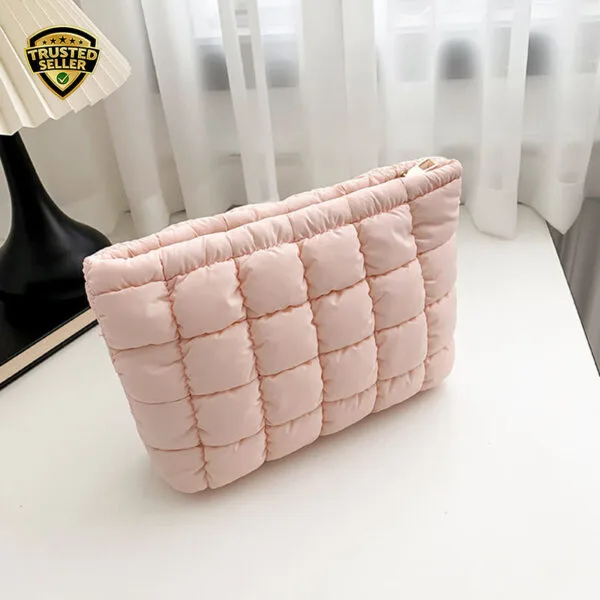
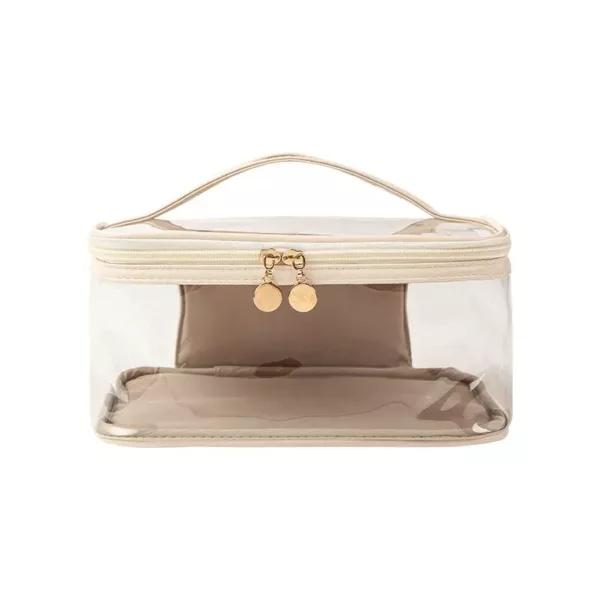
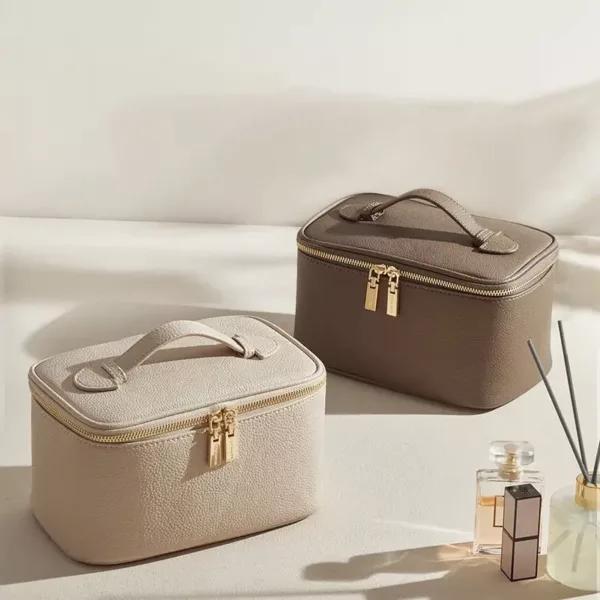
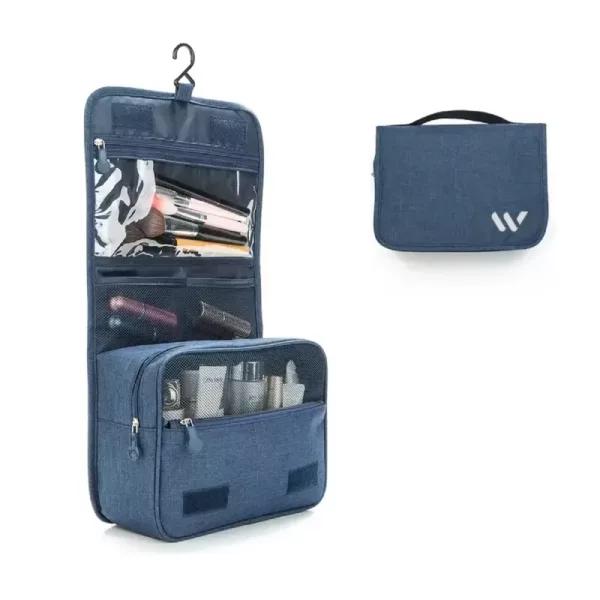
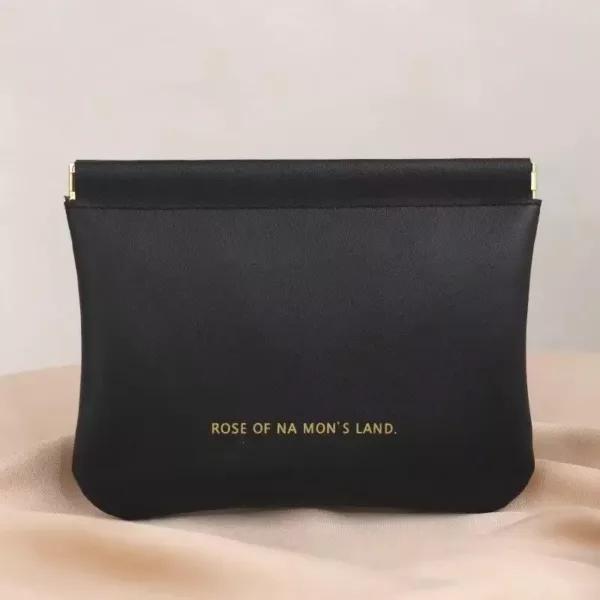
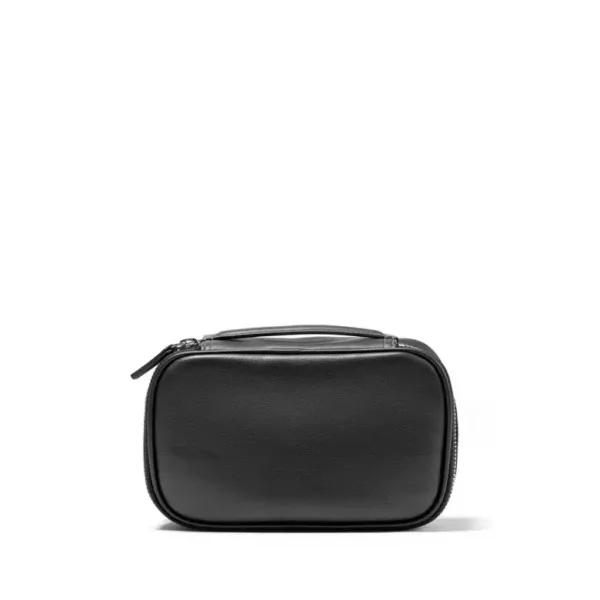
Shown styles are from our production lines; every program is built to your design, materials and branding.
MOQ and lead times
| MOQ | 500 pcs per style; Pantone-matched single color from 200 pcs |
|---|---|
| Sampling | 1-10 days, paid samples; one revision round in 2-3 days |
| Production | 7-15 days for fully custom orders |
| Rush options | +20% fee cuts lead time 30%; +30% cuts 50%; +40% cuts 70% |
| Shipping | Sea, rail or air; courier door to door in 5-7 working days for small lots; sea freight 40-45 days |
Go deeper
Sourcing only this category? Our dedicated cosmetic bag site, cosmeticbagmanufacturer.com, carries the full makeup bag collection with style-by-style detail.
Materials and Construction Options for Cosmetic Bags
Choosing a cosmetic bag supplier means choosing a factory that understands how materials fail. A bag that looks fine in a photo can leak, stain, or delaminate after three months in a bathroom. The difference is rarely visible. It lives in the coating, the seam, and the liner.
Most buyers start with the shell fabric. Polyester is dimensionally stable and prints well. It is the default for printed cosmetic bags because the artwork stays sharp. Nylon has a higher strength-to-weight ratio and better abrasion resistance, but coating and weave matter more than the fiber name. A 420D nylon with a poor PU coating will wet through faster than a tightly woven 190T polyester with a good one. Canvas gives structure and a premium hand feel, but it is heavy, it absorbs moisture, and it needs a liner to be practical for cosmetics. Synthetic leather looks expensive and wipes clean, but it can crack at fold lines if the backing is cheap. Transparent film pockets are excellent for visibility, yet they scratch and can yellow with UV exposure. Mesh breathes and drains, but it offers almost no liquid containment.
The liner is where leak control is won or lost. A wipe-clean liner is a smooth coated or film-based inner surface. It reduces absorption. A leak-resistant construction delays liquid escape but will not hold under pressure. A leakproof construction is tested to prevent liquid passage under stated conditions. Welded or sealed seams outperform ordinary stitched seams for liquids. A stitched bag can still work if it uses a removable waterproof insert. Say a buyer sells travel kits with shampoo bottles. A stitched bag with no insert will leak on the first flight. A welded TPU liner will not. The spec changes the product.
| Material | Good for | Where it fails |
|---|---|---|
| Polyester fabric | Printed designs, stable shape, wide weight range, recycled options | Lower abrasion resistance than nylon; coating quality decides water resistance |
| Nylon fabric | High strength-to-weight, soft hand feel, good abrasion resistance | Cost; stretches under load; UV degradation without treatment |
| Canvas | Structure, premium texture, durability | Heavy; absorbs moisture; requires separate liner for cosmetics |
| Synthetic leather | Wipe-clean surface, luxury look, easy branding | Cracks at fold lines; backing quality varies; can feel stiff |
| Transparent film | Content visibility, wipe-clean, travel organizer pockets | Scratches; yellows with UV; limited stretch |
| Mesh | Ventilation, visibility, stretch pockets, lightweight organization | No liquid containment; snags; limited structure |
Padding and reinforcement matter more in larger cosmetic bags and travel cases. Closed-cell foam adds structure and protects bottles from impact. Open-cell foam is soft and breathable but absorbs moisture unless protected. A reinforcement patch at the hanging hook is not optional. The complete load concentrates at one attachment point. Skip it and the bag fails at the hook.
How Different Buyers Should Specify This Product
There is no single correct cosmetic bag. The right spec depends on where the bag lives and what the buyer promises the end user. Three situations show how the decisions change.
Say a buyer sells makeup brush sets online. The customer opens the bag at a vanity. Visibility and organization drive the purchase. The buyer should specify a wide opening so the user does not have to remove every item to find one brush. Elastic loops separate cylindrical brush handles. Brush guards or a protective flap keep bristles from contacting other contents. A clear film pocket helps identify small tools. Cleanability is secondary because the bag stays at home. A stitched polyester shell with a wipe-clean liner is enough. Leakproof construction is overkill and adds cost.
Now say a buyer supplies hotel amenity kits. The bag is used once or twice, then discarded or kept as a souvenir. Cost per unit is the dominant factor. The buyer should specify a lightweight polyester or nonwoven shell. A simple stitched construction with no foam padding is fine. The bag does not need to survive a year. It needs to survive one trip from the bathroom counter to a suitcase. A removable insert is unnecessary. The spec should focus on print quality and minimum order quantity, not on leak control.
A third buyer sells travel toiletry bags for frequent flyers. This is the hardest spec. The bag must contain spills, survive being crushed in a carry-on, and hang in a cramped bathroom. The buyer should specify a hanging hook with a reinforcement patch. A leak-resistant or leakproof liner is non-negotiable. Welded seams matter. A drainage eyelet helps if the bag is used for wet items. The shell should be nylon or a coated polyester with good abrasion resistance. This buyer pays more per unit, but the alternative is returns and bad reviews. The spec has to match the promise.
These three buyers are all looking for a cosmetic bag manufacturer. They are not buying the same product. A supplier who treats them the same will miss at least two of them.
Customization That Changes Tooling, Cost, or Lead Time
Not all customization is equal. Some changes are free and fast. Others require new tooling and add weeks. A buyer who knows the difference can negotiate better and plan production realistically.
Printing a logo on an existing shell fabric is a low-impact change. The factory uses the same fabric, the same cutting dies, and the same sewing lines. Only the print plate or digital file changes. This adds little cost and no meaningful lead time. Color changes on polyester or nylon are similar, as long as the fabric is already in the supplier's network. A Pantone match may require a lab dip, but the production line does not change.
Changing the shell material is different. If a buyer moves from polyester to synthetic leather, the cutting behavior changes. The sewing machine settings change. The edge treatment changes. The factory may need new needles, new thread tension, and new finishing steps. This is not a tooling change in the mold sense, but it is a process change. It adds setup time and cost.
Adding a welded TPU liner is a bigger jump. Welded seams require heat-sealing equipment, not just sewing machines. The pattern has to be redesigned to allow the weld. The factory has to test the seal. This is a structural change. It affects cost per unit and lead time. The same goes for adding a custom-shaped foam insert or a rigid base. These require cutting dies or molds. A die for a simple rectangular foam panel is cheap. A die for a contoured brush holder is not.
Logo application method also changes the math. A woven label is cheap and fast. A metal plate requires a mold and a supplier. A heat-pressed PVC patch needs a die. Laser engraving is fast but works best on certain materials. Reflective logos add a material cost. A hidden logo system or a changeable logo system is the most complex. Buyers should ask the cosmetic bag supplier which customization options are already tooled for their factory. Reusing an existing die or mold saves money and time. Requesting a new one resets the clock.
What to Check Before Approving Production
Approving a pre-production sample is not the same as approving production. The sample can be perfect while the bulk order fails. Buyers should check specific things before signing off.
First, check the seam construction. On a stitched bag, look at the seam allowance. Too narrow and the seam will pull apart under load. On a welded bag, check the seal width and continuity. A weld that is thin in one spot will leak there. Flex the seam. A good weld survives repeated bending. A bad one cracks.
Second, check the liner. Rub it with a damp cloth. Does the color transfer? Does the surface pucker? A wipe-clean liner should not absorb moisture. If the bag is sold as leak-resistant or leakproof, the buyer should ask what test conditions were used. The words mean specific things. Leak-resistant delays liquid escape. Leakproof prevents it under stated test conditions. A factory that cannot state the test conditions should not use the word leakproof.
Third, check the hanging hook. Pull on it with the bag fully loaded. The load concentrates at one attachment point. If the reinforcement patch is missing or too small, the stitching will tear through the shell fabric. This is a common failure in cheap cosmetic bags. It is easy to check and easy to fix before production.
Fourth, check the zipper. Open and close it twenty times. Does it catch on the liner or the shell fabric? A zipper that runs smoothly on an empty bag can bind when the bag is full. The zipper tape should be sewn with enough clearance. The slider should not scrape the coating off the fabric.
Fifth, check colorfastness. Rub a white cloth against the printed or dyed fabric. If color transfers, the bag will stain clothing or other items in a suitcase. This is a basic test. It should be part of every pre-production approval.
Finally, check the packaging. The bag will be folded, packed, and shipped. If the shell creases permanently or the film pockets scratch during packing, the product arrives looking used. A buyer who sells online will get returns. A buyer who sells to retail will get chargebacks. The packaging spec is part of the product spec.
These checks take an hour. They prevent months of problems. A good cosmetic bag supplier will welcome them. A bad one will push back. That response is itself a signal.
For related categories with different construction demands, see our cooler bag manufacturing and packing cube production pages. If you need a simpler accessory with fewer components, our drawstring bag options may fit. And for the full factory workflow, start with our OEM/ODM process.
FAQ
What is the MOQ for custom cosmetic bags?
500 pieces per style. Pantone-matched single-color runs start at 200 pieces.
How long does production take?
Fully custom cosmetic bags run 7-15 days after sample approval. Rush options can cut lead time by up to 70% for a surcharge.
Can I get a sample first?
Yes. Paid samples take 1-10 days depending on complexity, and one revision round takes 2-3 days.
Which materials can you use?
Quilted nylon, clear PVC, PU, leather and canvas are all in regular production, with rPET available for recycled programs.