Custom Garment Bags
Suit covers and folding garment carriers for travel brands, menswear retailers and uniform programs.
Garment bags at a glance
| Formats | Folding travel garment bags, hanging suit covers, retail dress covers, clear covers |
|---|---|
| Fabrics | 600D and 1200D polyester, nylon, canvas in 8-15 oz, non-woven; PU coatings rated 3000 mm+ where needed |
| MOQ | Low MOQs, contact us with your quantity and configuration |
| Branding | Laser about 100 pcs; metal plate about 200; woven label about 300; heat-pressed PVC about 500 |
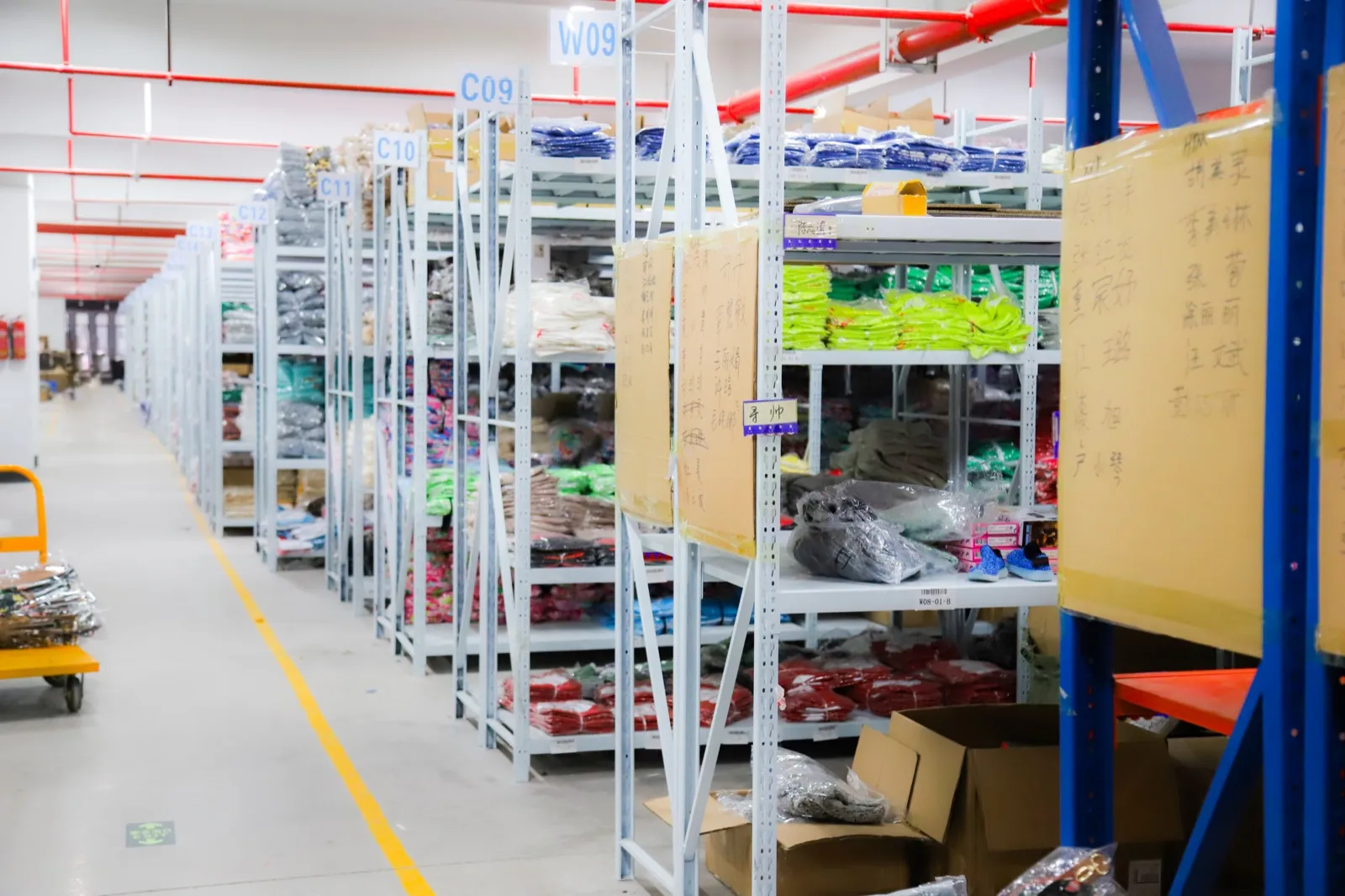
| Factory | BSCI-certified factory in Yiwu, Zhejiang, China; 30,000+ m² floor, 500+ workers, 100+ designers, 50+ automated lines |
| Capacity | 150,000 units monthly output; 220+ fabric suppliers |
| Certifications | amfori BSCI, ISO 9001, SGS, TUV, GRS |
| Samples | Paid samples in 1-10 days; one revision round in 2-3 days |
| Quality control | Final inspection step (2-3 days) against the approved sample before packing |
| Rush options | +20% fee cuts lead time about 30%; +30% about 50%; +40% about 70% |
| Pricing | Quoted per specification and quantity; send your target quantity and spec for a price |
| Shipping | Sea, rail or air; courier door to door in 5-7 working days for small lots; sea freight 40-45 days |
| Payment | T/T, L/C, D/P and D/A, credit card, PayPal, MoneyGram, Western Union |
| Reply time | Within 24 hours |
Built for: Menswear and bridal retailers, tailors and rental programs, dry cleaners, travel brands, e-commerce sellers and uniform programs.
Do you make custom garment bags in small quantities?
Tell us your quantity first and we will say straight away whether it fits a production run. To check quality before you commit, order a paid sample: 1-10 days, one revision round in 2-3 days.
Overview
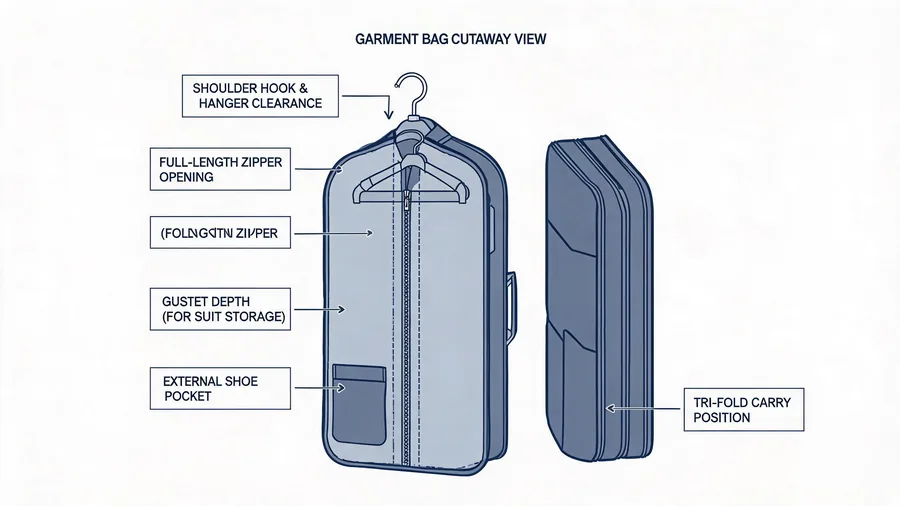
We build custom garment bags across the two jobs they do: protecting suits in transit and presenting garments at retail. Travel formats fold to carry-on dimensions with handles and shoulder straps; retail covers run lighter fabrics with printed branding panels.
Constructions draw on the same fabric bench as the rest of the factory, from 600D polyester to canvas, with waterproof coatings where the spec calls for them. Send your dimensions and feature list and we will sample within 1-10 days.
On the factory floor
MOQ and lead times
| MOQ | Low MOQs, contact us |
|---|---|
| Sampling | 1-10 days, paid samples; one revision round in 2-3 days |
| Production | confirmed per order after sample approval |
| Rush options | +20% fee cuts lead time 30%; +30% cuts 50%; +40% cuts 70% |
| Shipping | Sea, rail or air; courier door to door in 5-7 working days for small lots; sea freight 40-45 days |
Go deeper
Looking for a specific program? See custom suit bags, custom garment bags with logo, garment bags wholesale and clear garment bags.
Materials and construction options for garment bags
Say a buyer is sourcing custom garment bags for a retail line. The first decision is not color or logo. It is what the bag has to survive. A suit bag that hangs in a closet has an easy life. The same bag thrown into a car trunk, folded across a suitcase, or shipped flat in a carton faces abrasion, moisture, folding stress, and repeated zipper pulls. Material choice drives every later decision about seams, zippers, and what you can honestly claim.
Most garment bags start with a woven shell, a film window, or a nonwoven body. The industry reference for bag construction lists polyester, nylon, canvas, nonwoven fabric, transparent film, and synthetic leather as the realistic shell options. Each behaves differently under stitching, folding, and moisture. A buyer who picks the cheapest nonwoven because it looks fine in a photo will meet complaints about seam tear-out after three trips. That is not a defect. It is the wrong material for the use case.
| Material | Good for | Where it fails |
|---|---|---|
| Polyester woven (190T, 600D) | Retail garment bags, logo printing, dimensional stability, wide color range, recycled options | Lower tear strength than nylon at equal weight; stiff hand feel at heavy deniers |
| Nylon woven | High-strength-to-weight performance, soft hand, abrasion resistance, frequent folding | Higher cost; coating choice strongly affects water resistance; UV degradation over long exposure |
| Nonwoven (spunbond or similar) | Low-cost promotional bags, hotel or dry-cleaner use, short service life | Poor seam strength under load; tears propagate easily; limited cleanability |
| Transparent film (PEVA, PVC, TPU) | Visibility for retail or wardrobe organization; wipe-clean surface; travel organizers | Stiffness varies with thickness; PVC raises environmental and regulatory questions; film can crack at fold lines in cold conditions |
| Synthetic leather (PU or PVC coated) | Designer garment bags, structured appearance, premium retail presentation | Higher cost; surface scratches; PVC systems face restricted-substance scrutiny; edge treatment requires skilled sewing |
| Canvas or cotton duck | Durable, structured bags with natural texture; heavy-duty or heritage positioning | Heavier than synthetics; absorbs moisture; wrinkles; higher shipping cost per unit |
Construction matters as much as the shell. The reference distinguishes cleanability from leak control. A garment bag rarely needs to be leakproof. But a buyer offering a PEVA suit bag as water-resistant should understand what that requires. A stitched seam with a film window is not water-resistant. Water enters through needle holes. The reference describes welded or sealed seams as providing better leak containment than ordinary stitched seams, and notes that a stitched bag may use a removable waterproof insert when full seam sealing is unnecessary. So a claim of water resistance demands either welded seams or a specification that honestly limits the claim to the film panels only.
Zipper selection follows the same logic. A long garment bag zipper, often 80 to 120 cm, takes more abuse than a small pouch zipper. Buyers who specify a cheap coil zipper on a heavy canvas bag will see returns. The zipper tape must match the shell material in shrinkage and stiffness, or the bag puckers along the opening. This is a workmanship standard issue, not a material cost issue. A buyer who knows this asks the factory which zipper they pair with each shell option before approving a sample.
How buyers in different situations should specify this product
A sourcing manager for a hotel chain needs something different from a brand owner launching a designer garment bag. The reference terms tech pack, bill of materials, and specification sheet exist for exactly this reason. The same product category produces wildly different outcomes depending on which specification decisions the buyer controls. Here are three buyer situations and the decisions that actually change the result.
First, a promotional products distributor buying logo garment bags for a corporate gifting program. This buyer cares about unit cost, print quality, and lead time. The specification decisions that matter are shell weight, print method, and whether the bag needs to survive beyond the event. A 190T polyester bag with a one-color screen print is often the right answer. The buyer should specify the print location and size in the tech pack, not just say logo on front. They should also specify whether the bag needs a hanging hook. A hook adds a reinforcement patch at the attachment point because the complete load concentrates at one point, per the reference. Skipping the hook saves cost but changes how the recipient uses the bag. This buyer should also lock the color standard. A lab dip on polyester is cheap insurance against a full production run in the wrong corporate blue.
Second, a garment bag manufacturer building a private-label line for department stores. This buyer faces compliance pressure. The bag must meet the retailer's restricted substance requirements, survive transit testing, and look consistent across thousands of units. The critical specification decisions are material certification, seam construction, and the golden sample. The buyer should specify the exact film type if using a PEVA window, because PVC and PEVA are not interchangeable in restricted-substance reviews. They should specify seam allowances and stitch density in the workmanship standard. A 3 mm seam allowance on a nonwoven bag will fail at the zipper. A 10 mm allowance with a folded edge changes the cost but prevents the return. This buyer also needs a pre-production sample made with intended bulk materials, not a proto sample made from whatever was on the shelf. The reference defines these as different things for a reason.
Third, an e-commerce brand selling travel garment bags direct to consumer. This buyer lives and dies by reviews. The specification decisions that matter are folding performance, zipper smoothness, and honest claims. A travel garment bag that folds into a suitcase needs a shell that resists crease cracking. Transparent film can crack at fold lines in cold conditions, as noted in the material table. The buyer should specify the fold geometry and test it at low temperature if the product will ship to cold climates. They should also specify the zipper pull size and shape, because a tiny pull on a long zipper frustrates users. And they should write the product claims carefully. The reference distinguishes leak-resistant from leakproof. A travel bag that delays moisture but is not guaranteed liquid-tight under pressure should be called leak-resistant, not leakproof. A buyer who inflates this claim in the listing inherits the returns.
Customization that changes tooling, cost or lead time, versus customization that does not
Not all customization is equal. Some changes are free because they happen in the cutting or printing stage. Others require new tooling, new dies, or new molds, and those change cost and lead time. A buyer who understands this distinction negotiates better and avoids surprise invoices.
What does not change tooling? Color changes on woven polyester or nylon, as long as the fabric is available from the supplier. Logo printing by screen, heat transfer, or embroidery on a flat panel. Hang tag and packaging changes. Zipper pull color changes, if the hardware supplier stocks the color. These are specification-level changes. They affect the bill of materials and the artwork approval, but the production line does not need new equipment. Lead time impact is minimal, often zero if the change comes before material cutting.
What does change tooling? A custom-shaped transparent window. A new zipper pull design with a molded logo. A custom buckle or hook. A specific embossed pattern on synthetic leather. A new bag silhouette that requires a new cutting die. These changes require tooling fees and add lead time. A molded zipper pull might take two to three weeks for tooling before production can start. A custom cutting die for a curved garment bag panel adds cost and a few days. The buyer should ask the factory to separate tooling cost from unit cost in the quotation. That way the tooling is a one-time investment, and reorders only pay the unit price.
There is a middle category: changes that do not require new tooling but do change labor content. Adding a reinforced hanging hook means an extra reinforcement patch and more sewing time. Adding an interior mesh pocket for accessories means more cutting and stitching. Adding a removable insert for wet garments changes the entire construction sequence. These are not tooling issues, but they are cost and lead time issues. A buyer who lumps them with free color changes will see a higher quote than expected and think the factory is padding. The factory is not padding. The buyer changed the labor content.
The honest way to handle this is to ask the factory to quote customization in tiers. Tier one: print, color, packaging, hardware finish. Tier two: added components like pockets, hooks, inserts. Tier three: new silhouettes, custom hardware, custom film shapes. Each tier has a different cost and lead time behavior. A buyer who sends a tech pack with all three tiers mixed together cannot compare quotes from two garment bag suppliers. A buyer who separates them can.
What to check before approving production for this category
Approving production means signing off on a pre-production sample and a specification sheet. The reference defines the pre-production sample as one made with intended bulk materials and approved methods. If the factory sends a sample made from substitute fabric, that is a proto sample, not a pre-production sample. The buyer should reject it and ask for the correct sample. This is the single most common approval mistake in garment bag sourcing.
Inspection points come from the workmanship standard. Check the zipper installation first. The zipper should lie flat without puckering, the slider should move smoothly through the full length, and the zipper tape should match the shell color under the approved light source. Check the seam allowances. A garment bag seam that is too narrow will tear at the corners. Check the hanging hook reinforcement. The reference says a hanging hook requires reinforcement because the complete load is concentrated at one attachment point. If the hook is sewn through a single layer of nonwoven, it will fail. Check the film window edges if the bag has one. The film should be stitched or welded cleanly without wrinkles that will become cracks.
Claim control matters when performance wording is involved. The reference distinguishes cleanability, leak-resistant, and leakproof as different levels. A buyer who wants to say water-resistant on the product page must know what test condition supports that claim. If the bag has stitched seams and no waterproof insert, the claim should be limited to the film panels. If the bag is fully seam-sealed, the buyer should ask for the test method and the pass condition. The same applies to durability claims. Saying tear-resistant requires a fabric specification and a test method, not a marketing phrase. A buyer who writes tear-resistant in the tech pack without a test method will get a bag that is not tear-resistant in any measurable way.
Finally, check the AQL and defect classification before production starts. The reference defines AQL as the acceptance quality limit used with a sampling plan. The buyer and factory should agree on the AQL level and the defect classification before the first unit is cut. A critical defect, like a broken zipper or a detached hook, is not the same as a minor defect, like a loose thread. If the buyer does not define these, the factory uses its own standard. That standard may be reasonable, but it is the factory's standard, not the buyer's. A buyer who compares two garment bag suppliers on price alone is not comparing the same product. A buyer who compares them on specification is. For related categories, see how we handle custom cooler bags or custom cosmetic bags, where material and claim control follow the same discipline. If you are building a broader travel line, our full product range shows how these specification decisions carry across categories.
FAQ
What is the MOQ for garment bags?
Low MOQs, contact us with your quantity and configuration and we will confirm what works.
Which formats do you produce?
Folding travel garment bags, hanging suit covers and retail dress covers, in tri-fold and bi-fold constructions.
Which materials are available?
600D and 1200D polyester, nylon, canvas in 8-15 oz and non-woven options, with waterproof PU coatings rated 3000 mm+ where needed.
Can you brand garment bags?
Yes: woven labels, heat-pressed PVC logos, metal plates and printed panels, plus six packaging options.