Diaper Bag Manufacturer
Multi-pocket parent bags in backpack and tote formats, built on the same BSCI-certified lines as our travel gear.
Overview
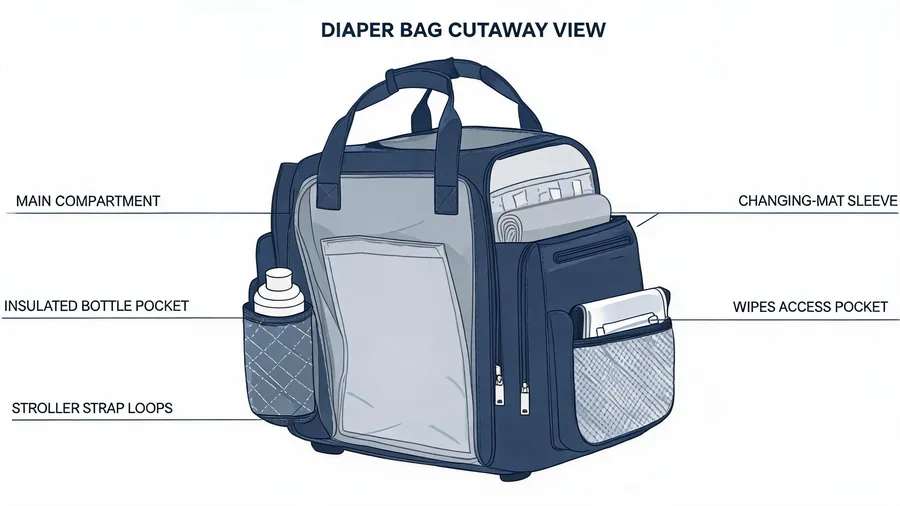
Diaper bags borrow the hardest requirements from two of our core categories: the organization and carry comfort of backpacks, and the wipe-clean, waterproof construction of cooler bags. We combine easy-clean 600D and 1200D polyester shells, PU-coated linings rated 3000 mm+ and optional insulated bottle pockets using our 8-15 mm closed-cell foam.
This is a design-led category: send your reference or feature list and our designers will develop the pattern, sampling in 1-10 days.
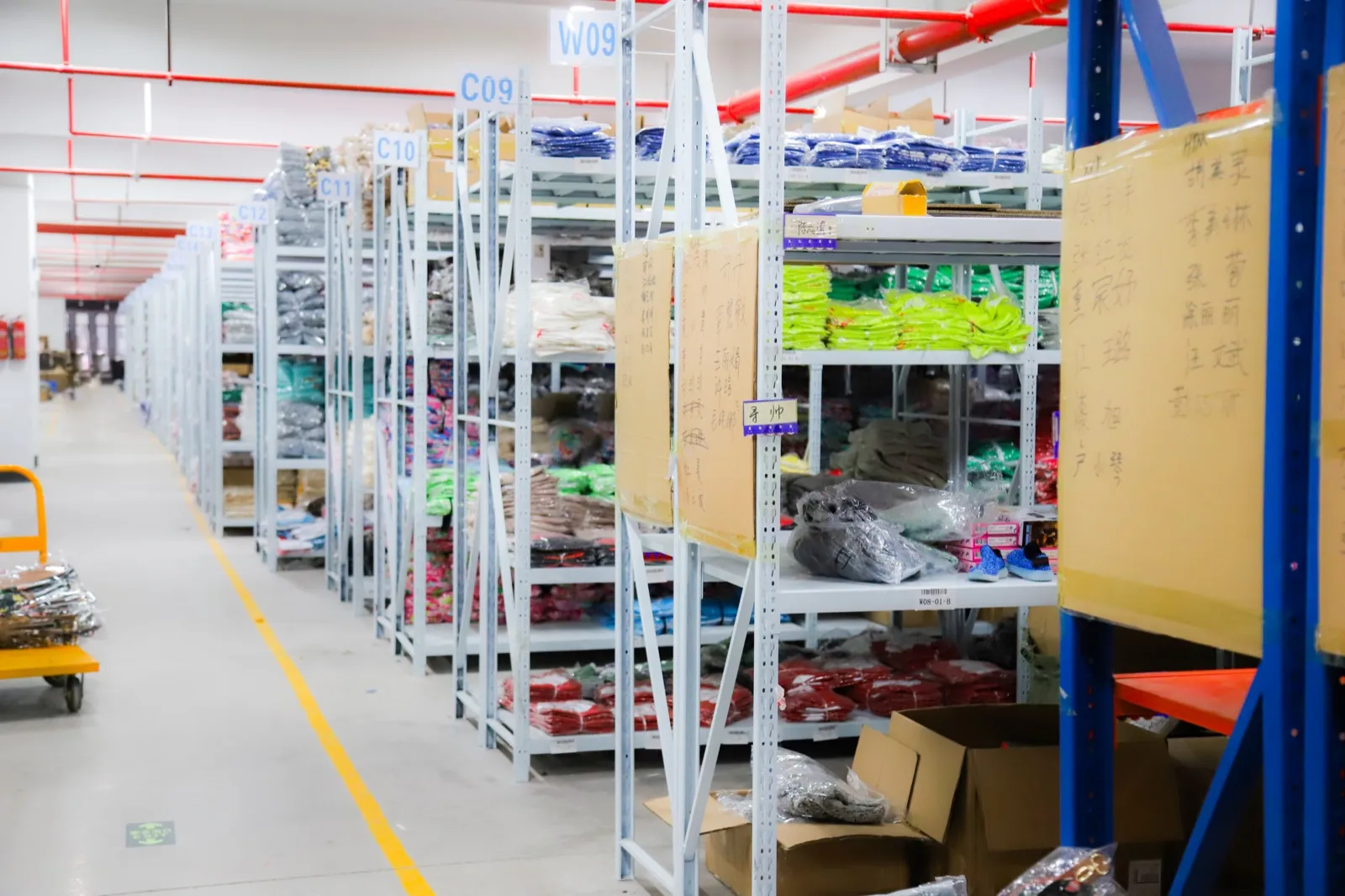
On the factory floor
MOQ and lead times
| MOQ | Low MOQs, contact us |
|---|---|
| Sampling | 1-10 days, paid samples; one revision round in 2-3 days |
| Production | confirmed per order after sample approval |
| Rush options | +20% fee cuts lead time 30%; +30% cuts 50%; +40% cuts 70% |
| Shipping | Sea, rail or air; courier door to door in 5-7 working days for small lots; sea freight 40-45 days |
Materials and construction options for a diaper bag manufacturer
Diaper bags live a harder life than most soft goods. They get set on wet changing tables, dropped in parking lots, packed with bottles that leak, and wiped down with whatever is within reach. A sourcing manager evaluating a diaper bag manufacturer should start from that reality, not from a spec sheet written for a fashion tote. The material choice drives cleanability, weight, cost, and how the bag survives repeated zipper cycles with one hand while the other holds a baby.
Most diaper bags are built from polyester, nylon, or a coated canvas. The reference materials break these into shell fabrics, coatings, and liners. Say a buyer wants a bag that looks structured on a shelf but still wipes clean after a formula spill. That buyer is really specifying two different layers: a face fabric for appearance and stiffness, and a coating or film for the surface that actually meets the mess. Polyester with a polyurethane coating is the common middle ground. It prints well, holds a shape, and cleans with limited moisture. Nylon costs more but gives better strength-to-weight, which matters when the bag is already loaded with diapers, wipes, a changing pad, and three spare outfits.
Canvas reads as premium and natural. It is also heavier, slower to dry, and more likely to absorb stains unless it is waxed or coated. Waxed cotton has a nice hand feel but marks and creases, and the finish needs maintenance. That is a problem for a product category where the buyer's customer expects to wipe and go. Transparent film pockets solve a different problem: visibility. A parent can see the pacifier without opening three zippered compartments. The tradeoff is that clear film shows scratches over time and does not breathe. Mesh pockets offer visibility and drainage but limited liquid containment. If a bottle leaks inside a mesh pocket, the liquid travels.
Here is how the realistic material choices compare for a custom diaper bag program.
| Material | What it is good for | Where it fails |
|---|---|---|
| Polyester with PU coating | Wipe-clean surface, good printability, moderate cost, stable dimensions | Coating can crack at fold points over time; lower perceived value than nylon |
| Nylon with PU or TPU coating | High strength-to-weight, better abrasion resistance, softer drape | Higher cost; coating choice strongly affects water resistance |
| Coated canvas | Structure, premium texture, durability | Heavy, slower to dry, stains unless coating is well specified |
| TPU film laminate | Leak-resistant welded seams, smooth cleanable surface | Stiff hand feel; welding requires tooling and careful seam design |
| Mesh | Ventilation, visibility, stretch pockets, lightweight organization | No liquid containment; snags on keys or toys |
| Transparent film | Content identification, wipe-clean pockets | Scratches with use; can yellow over time depending on polymer |
Leak control deserves its own paragraph because it is the most overclaimed feature in this category. The reference distinguishes three levels. Leak-resistant construction delays liquid escape but is not guaranteed under pressure. Leakproof construction is designed and tested to prevent liquid passage under stated test conditions. A stitched diaper bag with a wipe-clean liner is not leakproof. It is leak-resistant at best. If a buyer wants a genuinely leakproof wet compartment, the seam must be welded or sealed, or the bag must use a removable waterproof insert. A removable insert is the cheaper, lower-risk path. It isolates spills, simplifies cleaning, and lets the buyer avoid committing to full seam sealing on a bag that will mostly carry dry items.
Insulation is another area where a diaper bag manufacturer gets pushed into vague claims. A bottle pocket lined with closed-cell foam will slow temperature change. It will not keep a bottle cold for eight hours unless the buyer specifies the foam thickness, the liner, and the closure. The reference lists expanded polyethylene foam as a common choice for cooler-style panels. A buyer who wants a dedicated insulated bottle compartment should specify the foam type and thickness, and should ask whether the compartment is tested as a thermal barrier or just described as one.
How different buyers should specify a diaper bag
The same factory can build a $12 wholesale diaper bag and a $48 one. The difference is not always visible in a photo. It lives in the specification decisions. Here are three buyer situations that change what should be written into the tech pack.
A buyer launching a private-label brand on a marketplace platform is usually optimizing for landed cost and perceived value. Say they sell direct to consumers and handle returns themselves. Their diaper bag needs to look structured in a flat-lay photo, survive one season of use, and not generate complaints about broken zippers. For this buyer, the smart spec is polyester with a light PU coating, stitched seams, a wipe-clean liner in the main compartment, and a removable changing pad. They should avoid welded seams and TPU lamination because those add tooling cost and production time without changing the customer's willingness to pay. The changing pad is the detail that wins reviews. It should be specified as a separate removable piece, not sewn into the bag, so it can be cleaned and replaced.
A buyer selling into baby boutiques or a premium direct-to-consumer brand has a different problem. Their customer will touch the bag before buying, or will return it if the hand feel disappoints. This buyer should lead with nylon or a coated canvas, specify the coating weight, and pay attention to strap geometry and hardware. The reference notes that the lower strap anchor carries more pull force than expected, especially when the bag is lifted by one strap. A diaper bag gets lifted one-handed constantly. The strap attachment needs a reinforcement patch at the high-stress point. This buyer should also specify a hanging hook with reinforced attachment, because the complete load concentrates at that one point when the bag hangs from a stroller handle. That is a small detail that separates a bag that lasts from one that tears at the seam.
A buyer building a bag for a specific use case, like a travel diaper bag or a wet-dry separation bag, should start from the leak and cleanability requirements and work backward. Say the bag is marketed for cloth diapering families who carry wet items home. That bag needs a genuinely leakproof wet compartment. The buyer should specify a TPU film liner with welded seams, or a removable waterproof insert. They should also specify a drainage eyelet if the compartment is meant to be washed or hosed out. The reference defines a drainage eyelet as a reinforced opening that allows water to escape from a washable compartment. Without it, a leakproof compartment becomes a bucket that holds water in.
Across all three situations, the buyer should write down what the bag must survive. Not "durable." Not "high quality." Something like: survives 5,000 zipper cycles on the main opening, holds 8 kg distributed load when lifted by one strap, no visible coating crack after 500 folds at the gusset. Those numbers go into the specification sheet. A diaper bag manufacturer can quote against them. Without them, the factory quotes against their own assumptions, and the buyer discovers the gap when the returns start.
Customization that changes tooling, cost, or lead time
Not all customization is equal. Some changes are just artwork on an existing shell. Others require new molds, new cutting dies, or new welding fixtures. A buyer who understands the difference can negotiate better and plan production more accurately.
Changes that do not add tooling or meaningfully extend lead time include fabric color changes within the factory's existing supplier range, printed logo placement on a standard panel, zipper pull color, webbing color, and the addition or removal of simple internal pockets. These are specification changes. They affect the bill of materials and maybe the cutting layout, but they do not require new hardware or new machinery. A buyer can request these changes after the proto sample and still keep the production schedule intact, within reason.
Changes that do add tooling or time include custom hardware shapes, custom zipper pulls with a brand logo, welded seam construction on a bag that was originally stitched, TPU lamination on a new panel shape, and any change to the bag's structural panels that requires a new cutting die. Custom hardware is the big one. A branded zipper pull or buckle requires a mold. The mold cost is separate from the unit price, and the lead time for the hardware often runs longer than the bag sewing time. A buyer who wants branded hardware should approve the hardware sample before the bag sample, not after.
Welded seams are another tooling decision. A stitched bag can be modified with a new sewing pattern. A welded bag requires a welding fixture that matches the seam geometry. Change the seam path and the fixture changes. That is why a diaper bag manufacturer will often push a buyer toward a removable waterproof insert instead of a fully welded wet compartment on the first production run. The insert is a separate cut-and-sew piece. It can be tested and approved independently. If the market wants a welded version later, the buyer can invest in the fixture once the volume justifies it.
Lead time also shifts when the buyer changes the foam or insulation spec. Closed-cell foam in a bottle compartment is not just a material swap. It changes the panel construction, the stitch allowance, and sometimes the zipper length because the gusset gets thicker. A buyer who adds insulation after the pre-production sample should expect a new fit sample and a schedule slip. The honest way to handle this is to freeze the insulation spec before the golden sample, and to treat any change after that as a change control event with its own approval cycle.
What to check before approving production
Approving a diaper bag for production is not the same as liking the sample. The buyer is approving a specification that will be repeated hundreds or thousands of times. The reference gives us the vocabulary for this: tech pack, bill of materials, golden sample, tolerance, critical dimension, workmanship standard, AQL, defect classification.
First, check the critical dimensions against the approved spec. For a diaper bag, the critical dimensions include the strap length and anchor position, the changing pad size, the bottle pocket diameter, and the opening width of the main compartment. A strap that is 3 cm shorter than spec changes how the bag sits on a stroller handle. A bottle pocket that is 5 mm too narrow will not hold the bottle the brand promised. These are not cosmetic issues. They are fit and function failures.
Second, check the seams and stress points. The reference calls out reinforcement patches at high-stress attachments. A diaper bag has several: the strap anchors, the top handle, the hanging hook, and the corners of the changing pad pocket. The buyer should inspect the stitching at these points on the pre-production sample, and should specify a workmanship standard that defines acceptable stitch density, back-tacking, and trim. A seam that looks fine on a sample but has no back-tack at the strap anchor will fail in the field.
Third, check the cleanability and leak claims. If the bag is marketed as wipe-clean, the buyer should wipe the sample with a damp cloth and check for color transfer from the lining. The reference defines colorfastness as resistance to color change or transfer during rubbing, washing, or light exposure. A dark lining that bleeds onto a light changing pad is a defect. If the bag has a leak-resistant or leakproof compartment, the buyer should ask what test condition was used. Leakproof under a stated test condition is a claim that can be written into the spec. Leakproof in general is a claim that invites returns.
Fourth, check the zippers. A diaper bag gets opened one-handed, often while the other hand is occupied. The main zipper should run smoothly around the corners without catching. The buyer should specify the zipper type and size, and should test the sample by opening and closing it repeatedly while the bag is partially loaded. A zipper that binds on an empty sample will be worse when the bag is full. This is also where AQL comes in. The buyer and the factory should agree on the acceptance quality limit and the defect classification for zipper function, seam integrity, and coating appearance. A major defect on a diaper bag is a broken zipper, a torn seam at a stress point, or a coating that cracks at the fold. A minor defect is a loose thread or a slight color variation within tolerance.
Finally, check the documentation. The tech pack should list every material, the bill of materials should match the approved sample, and the golden sample should be signed and stored as the reference for production. If the buyer changes anything after the golden sample is approved, that is a change control event. The factory should not quietly swap a lining fabric or a foam thickness. The buyer should not assume the change is free. A disciplined diaper bag manufacturer will document the change, re-quote if needed, and issue a revised spec. A buyer who skips this step will approve a sample, receive a production run that does not match, and have no written basis for a claim.
For buyers who also source garment bags or cooler bags, the inspection logic is similar: define the critical dimensions, test the stress points, and write the performance claims into the spec. A cosmetic bag program has different cleanability requirements but the same discipline around liners and zippers. The factory that documents well in one category usually documents well in the others.
FAQ
What is the MOQ for diaper bags?
Low MOQs, contact us with your design and target quantity and we will confirm what works.
Which materials suit diaper bags?
Easy-wipe polyester shells in 600D and 1200D, nylon in 240-280 g/m², and waterproof PU/PVC-coated fabrics rated 3000 mm+ are all in regular production.
Can you add insulated bottle pockets?
Yes. The same closed-cell PE/XPE/EVA foam we use in cooler bags, 8-15 mm thick, can be built into bottle compartments.
Do you handle backpack and tote formats?
Both. Diaper backpacks run on our backpack lines and tote formats on our handbag lines, with the same QC standard.