Backpack and Duffle Bag Manufacturer
Laptop, travel, school and duffle programs from a factory that patterns around real device sizes and airline rules.
Overview
Our backpack factory covers the full commercial range: USB-charging commuter packs, airline-friendly travel bags, school bookbags and gym duffels. Patterns are engineered around standard 13, 15 and 17 inch laptop compartments and the IATA 40×30×20 cm cabin guideline.
Standard and embroidered styles start at 500 pieces; special fabrics at 1,000. Every order is checked against the approved sample before packing.
Representative styles
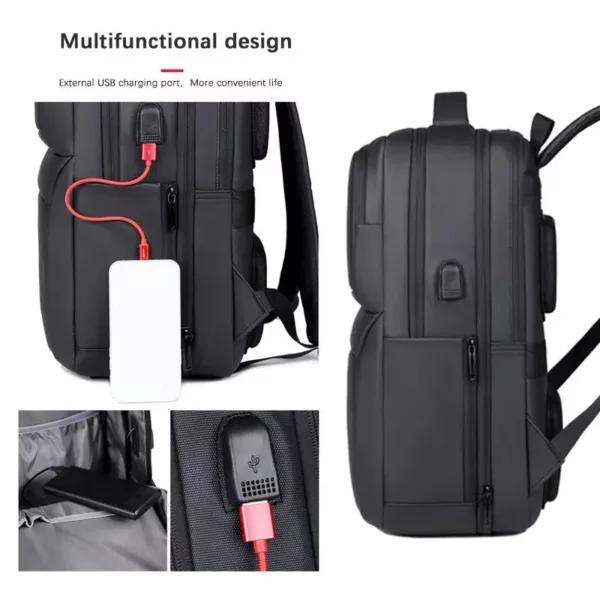
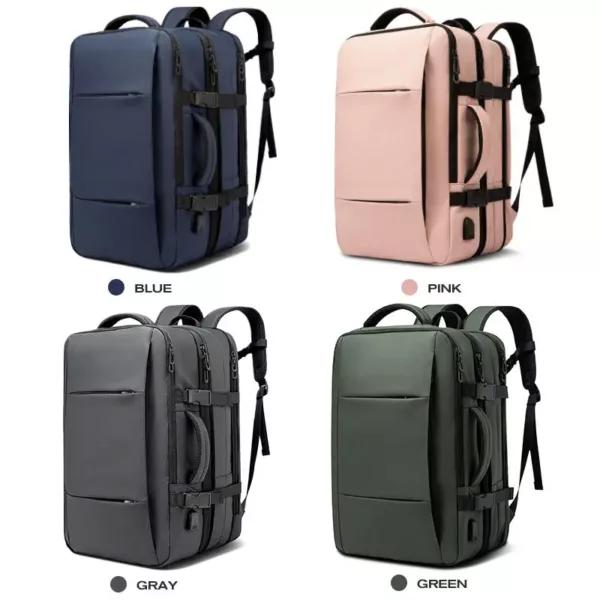
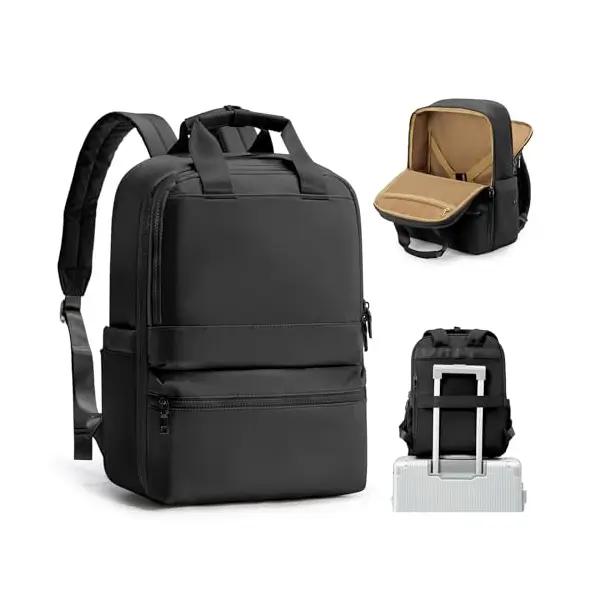
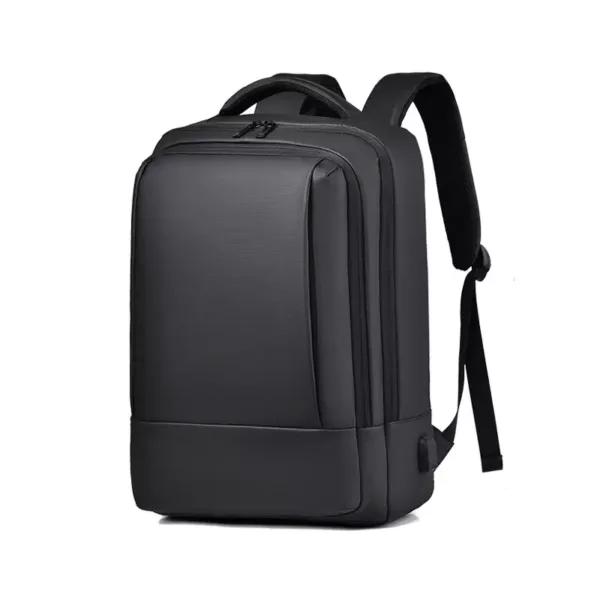
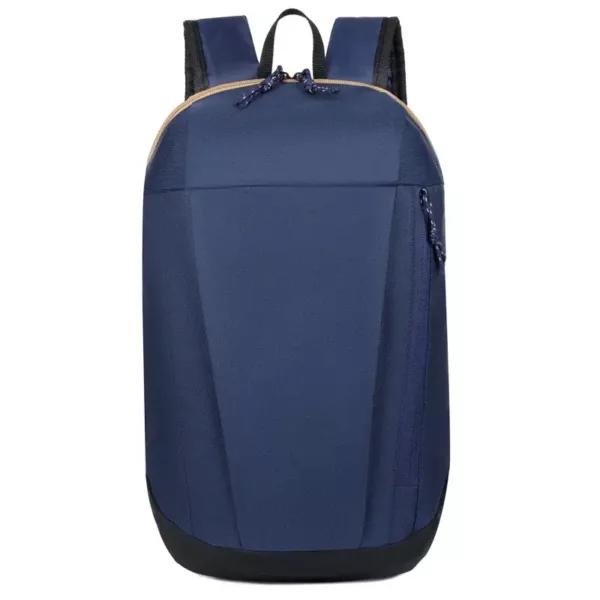
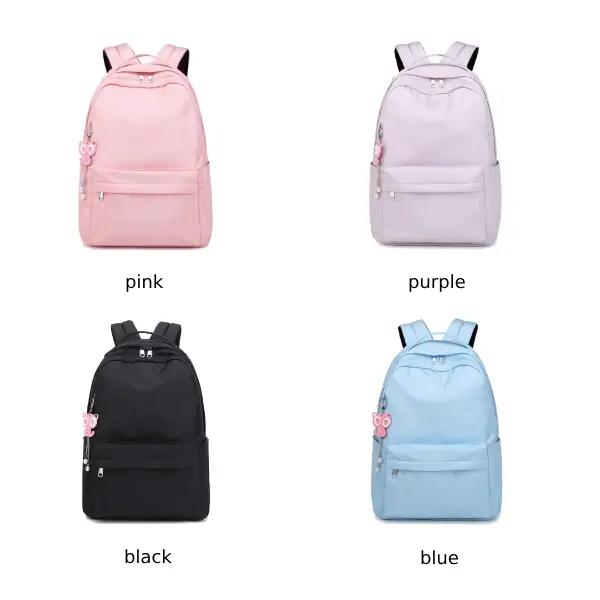
Shown styles are from our production lines; every program is built to your design, materials and branding.
Specifications
| Laptop compartments | 13″: 30×22×8 cm · 15″: 35×25×10 cm · 17″: 40×30×12 cm |
|---|---|
| Capacity guide | Daypacks 10-20L · commuter/travel 20-35L · expedition 35L+ |
| Carry-on reference | IATA cabin guideline 40×30×20 cm |
| Shell fabrics | 600D / 1200D polyester, nylon 240-280 g/m², canvas, PU leather, rPET |
MOQ and lead times
| MOQ | 500 pcs standard or embroidered; 1,000 pcs for special fabrics |
|---|---|
| Sampling | 1-10 days, paid samples; one revision round in 2-3 days |
| Production | 15-20 days; 25-30 days for orders above 10,000 units or complex builds |
| Rush options | +20% fee cuts lead time 30%; +30% cuts 50%; +40% cuts 70% |
| Shipping | Sea, rail or air; courier door to door in 5-7 working days for small lots; sea freight 40-45 days |
Go deeper
Want the full style catalog with fabric-by-fabric options? Our dedicated backpack site, backpacksfactory.com, goes deeper on every line.
Materials and Construction Options for Custom Backpacks
Say you're comparing suppliers and one quotes polyester, another nylon, a third canvas. All three can make a backpack. They won't make the same backpack. A duffle bag manufacturer faces the same split when buyers ask for hybrid carry goods, and the fabric choice drives the entire build. The shell sets the weight, the drape, the water behavior, and how the bag survives a year of daily use.
Polyester is the workhorse. It costs less, holds dye well, and doesn't stretch much when wet. You'll see it in school packs, promo bags, and volume OEM runs. Nylon costs more but gives you more strength per gram. It flexes and recovers, which matters on straps and high-wear panels. Canvas brings structure and a tactile, natural look. It's heavier and absorbs water unless treated. Ripstop adds a grid of reinforcement yarns that stops small tears from running. Mesh shows up on pockets and back panels where airflow matters more than abrasion resistance.
The coating changes everything. A polyurethane coating improves water resistance and hand feel. PVC coating adds stiffness and serious moisture protection. TPU film gives you a flexible waterproof laminate. Waxed cotton sheds water but marks, creases, and needs care. No coating makes a fabric waterproof on its own. The seam construction has to match the claim.
| Material | Good for | Where it fails |
|---|---|---|
| Polyester fabric | Budget runs, bright prints, low moisture absorption, dimensional stability | Lower strength-to-weight than nylon; can feel stiff in heavy weights |
| Nylon fabric | High-wear panels, straps, lightweight technical packs, abrasion resistance | Cost; stretches when wet; UV exposure weakens uncoated nylon faster |
| Canvas | Structured everyday packs, heritage look, tactile texture | Heavy; absorbs water; cotton canvas sags when loaded wet |
| Ripstop fabric | Ultralight packs, tear-prone zones, packable designs | Grid texture shows through printing; not inherently waterproof |
| Mesh | Ventilated back panels, stretch pockets, visibility | Low abrasion resistance; snags easily; no structure |
| Synthetic leather | Trim, accents, premium look at lower cost than leather | Peels with heavy flex; scratches show; edge treatment matters |
Denier and GSM are not the same thing. Denier describes yarn linear density. GSM describes mass per area. A 600D polyester and a 600D nylon are not equivalent in strength or hand feel. You need the coating weight, the weave, and the fabric count too. Ask for the full spec, not just the denier number.
How Different Buyers Should Specify a Custom Backpack
Three buyers walk into the same factory. One wants 5,000 school bags for a retail chain. One wants 300 technical daypacks for a Kickstarter. One wants 50 leather-trimmed corporate gifts. They need different specs. Here's what actually changes the outcome.
Say you're the school bag buyer. Your priority is landed cost and durability across a school year. You'll spec polyester, probably 600D or a coated 300T weave. You'll want reinforced strap anchors, a base panel that resists dragging, and zippers sized for kid hands. The frame sheet can be simple. A semi-structured body with a foam back panel is enough. You don't need load lifters or a hip belt. You do need to control the maximum recommended load, because a kid will stuff it with books until the zipper fails. The spec should state the capacity and the load limit clearly.
Now say you're the technical daypack buyer. You're selling to commuters and hikers who will carry 8 to 15 kilos. The carrying system is now the product. You'll want a frame sheet or internal stays to transfer load. Shoulder straps need a foam core with spacer mesh facing. A sternum strap reduces outward strap movement. A hip belt stabilizes the load and moves some weight to the pelvis. Compression straps control load shift. The back panel needs foam channels for ventilation, but too much air space moves the load away from the body and hurts stability. This is a balance, not a checkbox.
Then there's the corporate gift buyer. Fifty units. Leather trim, maybe a laptop sleeve, a subtle debossed logo. This buyer cares about hand feel and first impression. Canvas or synthetic leather gives the right look. The build is simpler, but the edge treatment and hardware finish carry the product. A cheap zipper pull ruins the gift. This buyer should spend the budget on hardware and finishing, not on load-bearing engineering. MOQ becomes the constraint. Low runs often mean higher unit cost and fewer customization options.
For water resistance claims, the spec must match the intended use. A light rain shower needs a different construction than a sustained downpour. Some buyers specify a PU coating at 3000 mm or higher for rain protection, while others require a TPU lamination at 10,000 mm or more for prolonged exposure. Those thresholds are examples, not universal standards. The real question is whether the seams are heat-welded or taped, and whether the zipper is waterproof. A coated fabric with stitched, untaped seams will leak through the needle holes. Don't write 'waterproof' on the spec without defining the seam construction.
Customization That Changes Tooling, Cost, or Lead Time
Not all customization is equal. Some changes cost nothing but a few days. Others require new tooling and add weeks. Know the difference before you commit.
Logo application usually doesn't change tooling. Screen printing, heat transfer, embroidery, and woven labels use existing equipment. The MOQ for each process varies, but the bag pattern stays the same. Pantone color matching on fabric is a different story. Dyeing fabric to a custom color often requires a minimum order per colorway and adds lead time. The color must be approved against a physical standard, not a screen.
Hardware is a tooling trigger. A custom zipper pull, a branded buckle, or a metal logo plate needs a mold or die. That's tooling cost and tooling lead time. Standard hardware in a standard finish doesn't. If you want a specific YKK zipper color, that's a stock item or a short lead. If you want a custom-shaped pull with your logo, expect to pay for the mold and wait.
Structural changes are the biggest lever. Moving a pocket, changing the opening shape, adding a frame sheet, or altering the strap anchor points changes the pattern. A new pattern means new cutting dies, new sewing instructions, and a new sample. That's the real cost. Color changes on the same pattern are cheap. Pattern changes are not.
Fabric substitution sits in the middle. Swapping 600D polyester for 600D nylon on the same pattern is usually straightforward. Swapping canvas for ripstop is not. The drape, the seam allowance, and the hardware compatibility all shift. The factory may need to adjust the pattern even though the bag looks the same in a sketch.
Packaging customization is the easiest win. A poly bag costs almost nothing to change. A branded poly mailer or a gift box with a handle bag adds cost and lead time, but no tooling. Hang tags and dust bags fall in the same category. If you need to hit a launch date, lock the packaging early. It's the last thing produced and the first thing that delays a shipment.
What to Check Before Approving Production
You've seen the sample. It looks right. Before you sign off, check the things that fail in the field. The sample is a promise. The production run is where promises break.
Start with the strap anchors. The upper strap attaches to the top back panel with a reinforced box-X. The lower strap anchors near the bottom back panel or side gusset. The lower anchor carries more pull force than most buyers expect, especially when the bag is lifted by one strap. Grab the sample by one strap and pull hard. If the anchor puckers or the seam opens, the production run will fail the same way. Ask for reinforcement patches at every high-stress attachment point.
Check the zippers on the main opening and the pockets. The opening length is a spec, not a guess. Measure it. A zipper that's too short makes the bag hard to pack. A zipper that's too long adds cost and can catch on the gusset. Test the zipper with the bag fully loaded. Zippers fail when the load pushes the teeth apart, not when the bag is empty.
Look at the seam types and stitch density. The spec should state the seam allowance and the stitch count per inch. A backpack with 6 stitches per inch will blow out faster than one with 8 or 10. The base seam, the strap anchors, and the grab handle need double stitching or bartacks. If the spec doesn't list stitch density, ask for it.
For water resistance claims, define the test method and the acceptance limit. A spray test measures surface wetting. A hydrostatic head test measures pressure. They are not the same. If the spec says 'water-resistant,' ask what that means. The conditioning state matters too. A fabric tested at room temperature may behave differently after UV exposure or abrasion. Don't accept a claim without a test method attached.
Capacity is another trap. The spec should state the internal volume in liters and the measurement method. A 20-liter bag can measure 18 or 22 liters depending on how you fill it. If you're selling a 20-liter daypack, the production run should match the sample within the stated tolerance. Ask for the dimension diagram with measurement points and tolerances. If the factory can't produce one, walk away.
Finally, check the label content and care instructions. The label must match the materials. A bag labeled '100% polyester' that contains nylon lining is a compliance problem. The care instructions have to reflect the coating. A PU-coated fabric may not survive machine washing. If the label says machine washable and the coating peels after three washes, that's a return. The label is part of the spec, not an afterthought.
Our OEM process page walks through the same checks in the context of a full production run. If you're also sourcing packing cubes or cooler bags, the inspection logic carries over. The materials change. The discipline doesn't.
FAQ
What is the MOQ for custom backpacks?
500 pieces for standard and embroidered styles; 1,000 pieces for special fabrics.
How long does backpack production take?
Mass production runs 15-20 days. Orders above 10,000 units or with complex construction run 25-30 days.
Can you size a bag around a specific laptop?
Yes. Standard compartments fit 13, 15 and 17 inch laptops, and we adjust patterns to your device or capacity target.
Do you make travel-legal carry-ons?
We pattern to the IATA cabin guideline of 40 by 30 by 20 cm on request.