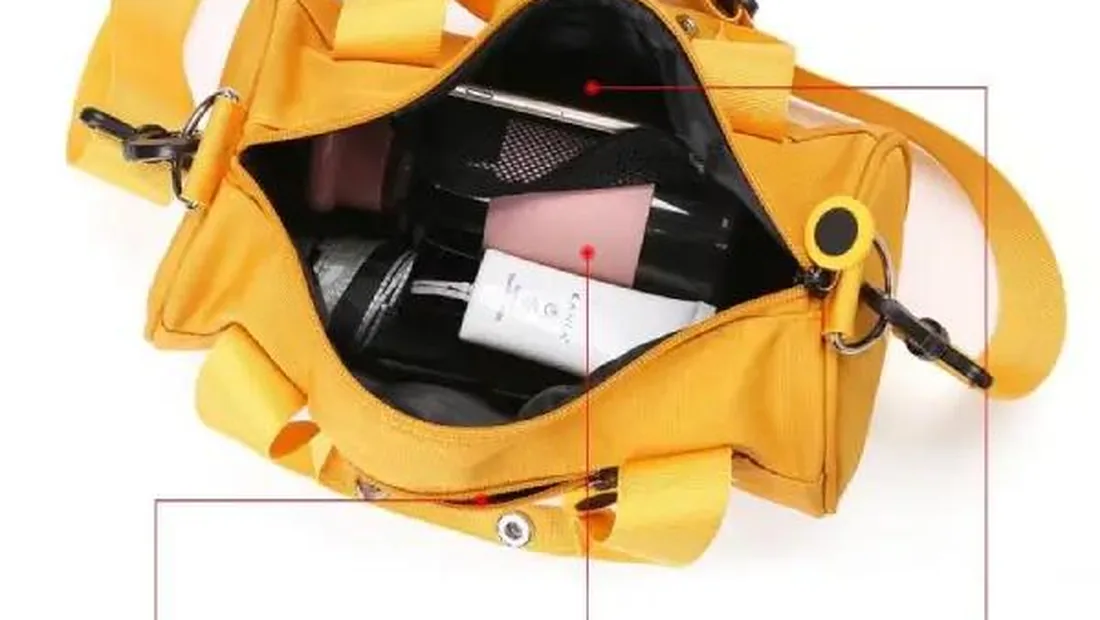
Gym bag wholesale is a specification problem before it is a sourcing problem. Two factories can quote the same silhouette and ship you two different products: one that survives a year of locker-room floors, one that comes back with split bar-tacks and a dead zipper. The difference lives in the tech pack, not the photo. This guide walks through what to write down before anyone quotes.
Start With the Buyer, Not the Bag: What a Gym Duffle Has to Survive
Say a buyer sends a factory a picture of a duffle and asks for a price. That request is unanswerable. A photo carries no fabric weight, no lining, no hardware grade, no tolerance on the strap drop, and no decision about whether the base is padded or boarded. What comes back is a guess dressed as a quote.
Map the end use first. A daily gym commute bag gets thrown on tile, stuffed into a car trunk, and carried by one strap when the user is already late. A team kit bag gets loaded with wet towels and cleats and stacked in a van. A studio retail bag sells on shelf presence and hand feel more than on abrasion numbers. A promotional giveaway is judged on print quality and delivered cost, and it will be used twice a week at most. Four briefs. Four different constructions.
The abuse points to write into the brief
- Repeated floor contact: base panel abrasion, seam strength at the bottom corners.
- Damp towels and wet shoes: liner choice, ventilation, and whether the wet zone is separated from dry contents.
- Overloading: webbing width, attachment reinforcement, and where the load transfers into the bag body.
- Strap strain: the upper and lower anchor points, which usually carry more pull than buyers expect.
- Zipper duty cycles: main opening versus a small valuables pocket, which are not the same specification.
A written end-use profile is what a factory prices and samples against. Send the profile, not just the picture. If the profile is thin, ask the supplier what they would add, then decide.
Fabric and Coating Choices That Hold Up to Daily Gym Use
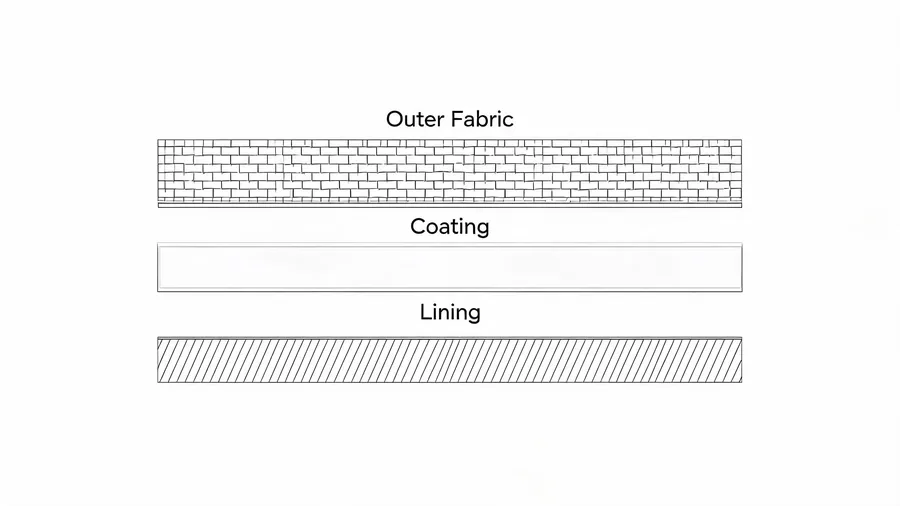
Shell fabrics get sold under marketing names. Buyers should compare them by construction instead. Polyester is dimensionally stable, prints well, and comes in a wide range of weights, weaves and coatings. Nylon offers high strength-to-weight and good abrasion resistance, though coating and weave change water resistance more than the fiber name does. Canvas is a durable plain weave, often cotton or a blend, chosen for structure and texture. Cotton duck is a tightly woven canvas with a smooth, firm face. Ripstop uses reinforcement yarns in a grid to limit tear propagation. Mesh is an open structure for ventilation and stretch pockets. Nonwoven appears as backing, reinforcement and low-cost liners. Synthetic leather is a coated composite on a textile backing, commonly PU or PVC. Leather needs control of thickness, temper, colorfastness and edge treatment.
Specification terms to demand on the quote
Denier describes yarn linear density and does not by itself state finished-fabric strength. GSM states mass per square meter for fabric, film, nonwoven or composite. Fabric count gives warp and weft yarns per unit length. Coating weight states the mass of coating per unit area, or total coated-fabric mass, as defined in the specification. Thickness is measured under a stated pressure, which matters for folding, sewing and thermal performance. Hand feel covers softness, stiffness and drape. Colorfastness covers resistance to color change or transfer under rubbing, washing, light or moisture. Ask for all seven in writing. A quote that lists only "600D polyester" is a starting point, not a specification.
Coatings, barriers, padding and reinforcement
Coatings and films are chosen by function. PU coating improves water resistance, hand feel or durability. PVC coating suits stiffness, surface protection or strong moisture resistance. TPU film supports waterproof laminates and welded constructions. EVA film suits cleanable liners and moisture-resistant inner surfaces. BOPET film appears in reflective laminates and barrier builds. Lamination bonds two or more layers to combine appearance, structure, barrier performance or insulation, and backing adds stability behind the face material.
Padding is where cheap bags fail quietly. Open-cell foam is soft and breathable but compresses and absorbs moisture unless protected. Closed-cell foam absorbs little and is used for structure, impact cushioning and thermal insulation. EPE foam is a lightweight closed-cell option common in protective panels; PU foam comes in flexible and rigid forms. Spacer mesh is a three-dimensional textile that cushions and moves air in straps and back panels. Plastic board and fiberboard stiffen bases and side panels, and a reinforcement patch sits at any high-stress attachment or seam. The exact thickness and density belong in the approved specification, not in a chat message.
| Shell option | Where it earns its place | What to watch |
|---|---|---|
| Polyester, various deniers and coatings | High-volume gym and duffle programs, print-heavy designs | Coating weight and backing drive durability more than the denier headline |
| Nylon | Lightweight bags that still resist abrasion | Water resistance depends on coating and weave, not the fiber alone |
| Canvas and cotton duck | Structure, texture, retail shelf presence | Moisture behavior and colorfastness need a lab dip before bulk |
| Ripstop | Light shells where tear propagation is the risk | Grid yarns limit tearing; they do not add puncture resistance |
| Mesh and spacer mesh | Ventilated pockets, straps, back panels | Edge finish and stretch recovery decide how it ages |
| Synthetic leather and leather | Premium trims, handles, accents | Temper, thickness and edge treatment must be specified |
Buyers comparing this against a duffle-specific brief can cross-read the wholesale duffle bag guide, which covers the same trade-offs from the duffle side.
Size, Compartments and Layout: What Sells in Bulk Gym Bags
Compartment sets are not standardized across the market, and anyone who tells you otherwise is quoting a catalog, not a spec. What a buyer can do is decide the compartment set for their own program and hold the factory to it. The common set runs: a main body, a ventilated shoe or wet pocket, a bottle sleeve, a small valuables pocket, and a key clip. Add or drop from there based on the end-use profile.
Mesh does the ventilation work. Spacer mesh does the cushioning work. Elastic binding finishes the openings on both, and its recovery after repeated stretching is the thing to test, because a pocket that sags after a month reads as cheap to the end user.
Base structure changes how the bag carries
A plastic board base keeps a loaded bag sitting upright on a bench. Fiberboard stiffens more cheaply but needs moisture exposure controlled, which is a real risk in a gym bag. A reinforcement patch at the base corners spreads load where the seam meets the floor. None of this shows in a product photo, and all of it shows after three months of use.
Straps, Zippers and Hardware: The Parts That Fail First
Hardware is where a gym duffle earns its reputation. The zipper is not one part. It is a chain of interlocking teeth or coils on textile tape, a slider that joins or separates it, and a puller for hand operation. Webbing forms straps, handles, binding and attachment points. Buckles release quickly; ladder locks and tri-glides adjust length and hold position under tension; D-rings and swivel hooks route and detach; cord locks hold drawcords; hook-and-loop closes flaps, dividers and removable components; rivets and grommets handle mechanical fastening and drainage or routing respectively.
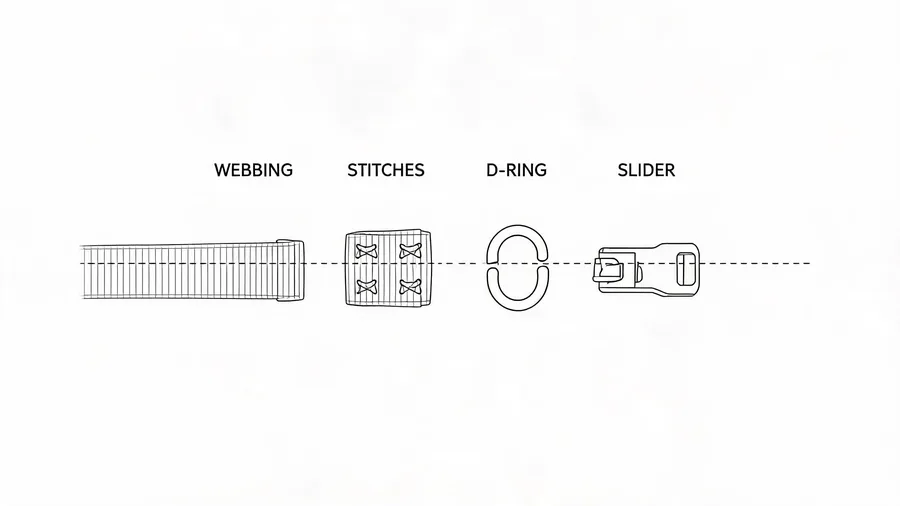
Load travels through attachment points, not through the middle of a strap. The upper anchor usually ties into the top back panel with a reinforced box-X, and the lower anchor sits near the bottom panel or side gusset, often carrying more pull than buyers expect, especially when the bag is lifted by one strap. Bar-tacks and rivet placement belong in the workmanship standard, with reinforcement patches at the high-stress seams. Piping, binding and elastic binding are edge details that affect both durability and the way the bag reads on a shelf. Specify the hardware by function and load, then let the factory propose the grade.
Logo, Print and Decoration Options for Custom Gym Bags
Decoration starts with approval artifacts, not with the logo file. A strike-off is a printed sample used to approve artwork, color, scale, registration and print quality. A lab dip is a small dyed material sample submitted for color approval before bulk production. A color standard is the approved physical or digital reference used to evaluate production color. Without those three, a buyer and a factory are arguing about a screen.
Each decoration route demands different artwork and different placement tolerance. Embroidered logos need digitizing and a stitch plan. Printed panels need registration control and a strike-off. Woven labels, metal plates, heat-transfer PVC and laser-cut or reflective details each have their own artwork requirements and their own minimum order quantities, which vary by process and should be confirmed in writing for the specific program.
Tolerance and critical dimension
Tolerance is the permitted variation from a specified nominal value. A critical dimension is a measurement that directly affects fit, function, component compatibility or safety. Logo placement is a critical dimension on a retail bag, which is why it gets its own drawing with its own tolerance rather than a note on the general arrangement. If a factory cannot tell you which dimensions on your bag are critical, that is a signal.
From Tech Pack to Golden Sample: The Sampling and Approval Chain
The documents drive the project. A tech pack is the controlled product specification: dimensions, materials, construction details, artwork, labels, packaging and test requirements. The bill of materials lists every material, component, quantity, color and supplier reference for one product. The specification sheet defines dimensions, tolerances, materials, workmanship, performance and packaging. The workmanship standard documents acceptance criteria for sewing, trimming, cleanliness, symmetry and assembly.
Samples come in a sequence, and each one is approved for something different. A proto sample evaluates concept, shape, construction and initial dimensions. A fit sample evaluates wear, access, strap geometry and ergonomic relationship to the user. A pre-production sample is made with intended bulk materials and approved methods. A golden sample is the approved physical reference used to compare production workmanship and appearance. Skipping a stage to save a week usually costs more than a week later.
Change control is not paperwork
Change control is the documented approval process for revisions to materials, patterns, construction, artwork, tests or packaging. It matters because a small substitution, a different zipper tape, a lighter foam, a shifted print, can pass unnoticed through a sample room and land in a container. Every revision should route through the same approval path as the original, with the golden sample updated to match.
Checking Bulk Gym Bags Before They Ship: AQL, Defects and Tolerances
AQL stands for acceptance quality limit, and it is used with a sampling plan to determine inspection sample size and acceptance numbers. The specific levels and sample sizes are set in the approved specification and in the inspection plan agreed with the factory, not pulled from memory. What matters at the brief stage is that the plan exists and that both sides have signed it.
Defect classification assigns critical, major or minor severity based on risk and product impact. A broken zipper on a main compartment is not the same severity as a loose thread inside a pocket, and a plan that treats them the same will either reject good production or pass bad production. Two production-efficiency terms also affect material planning: yield, the usable quantity obtained from material or production relative to input, and marker efficiency, the percentage of material area used by pattern pieces in a cutting layout. Both influence how a factory plans fabric, and both show up in how confidently a delivery date holds.
A pre-shipment checklist to hand to an inspector
- Confirm the golden sample is on site and matches the approved revision.
- Verify shell, lining, foam and hardware against the bill of materials.
- Measure the critical dimensions and record against tolerance.
- Check logo placement against its own drawing and tolerance.
- Pull-test bar-tacks, strap anchors and base corner reinforcement.
- Cycle the main zipper and the wet-pocket zipper to the agreed count.
- Inspect ventilation openings and elastic binding recovery.
- Classify every finding as critical, major or minor before the report goes out.
If this is your first bulk gym bag program, it helps to see how the same logic applies to other categories before you commit. The backpack program page and the garment bag wholesale guide both show how a written specification drives sampling, and the contact page is where a spec and a target quantity can be turned into a quote.
Frequently Asked Questions
Where can I buy wholesale bags online?
Marketplace and distributor listings are one route, and they work when you need small quantities of stock shapes. They are a poor route when you need a specific fabric weight, a specific compartment layout, or your own logo applied to an approved placement. For that, you are sourcing a custom program, not buying a listing. Start with a written brief and send it to manufacturers directly through their inquiry forms. A supplier who answers the brief point by point is worth a second conversation.
Where can I buy bulk backpacks wholesale?
The same logic applies. Bulk backpacks are usually specified rather than picked from a catalog once you pass a certain volume, because the shell, foam, hardware and decoration all need to be fixed before production. Ask any supplier for the specification sheet, the bill of materials and the workmanship standard behind the quote. If those documents do not exist, you are comparing photos, not products. Category pages such as the backpack program page on this site show how a custom brief is structured.
How do I find a gym bag manufacturer rather than a reseller?
Ask three questions. First, who owns the pattern and the sample room. Second, can they show the workmanship standard and the defect classification they inspect against. Third, can they walk you through change control on a revision. A reseller will answer all three vaguely or deflect. A manufacturer will send documents. Also ask what they make in-house versus what they buy in, because hardware and foam sourcing is often the real bottleneck.
What should a gym bag spec sheet include before a factory quotes?
Dimensions with tolerances, and a note on which ones are critical. Shell, lining, foam and hardware with their construction details. Compartment layout and edge finishes. Decoration route, artwork files and placement tolerance. Packaging format. Test requirements and the inspection plan. Workmanship acceptance criteria. Any one of these missing turns a quote into an estimate, and estimates move once production starts.