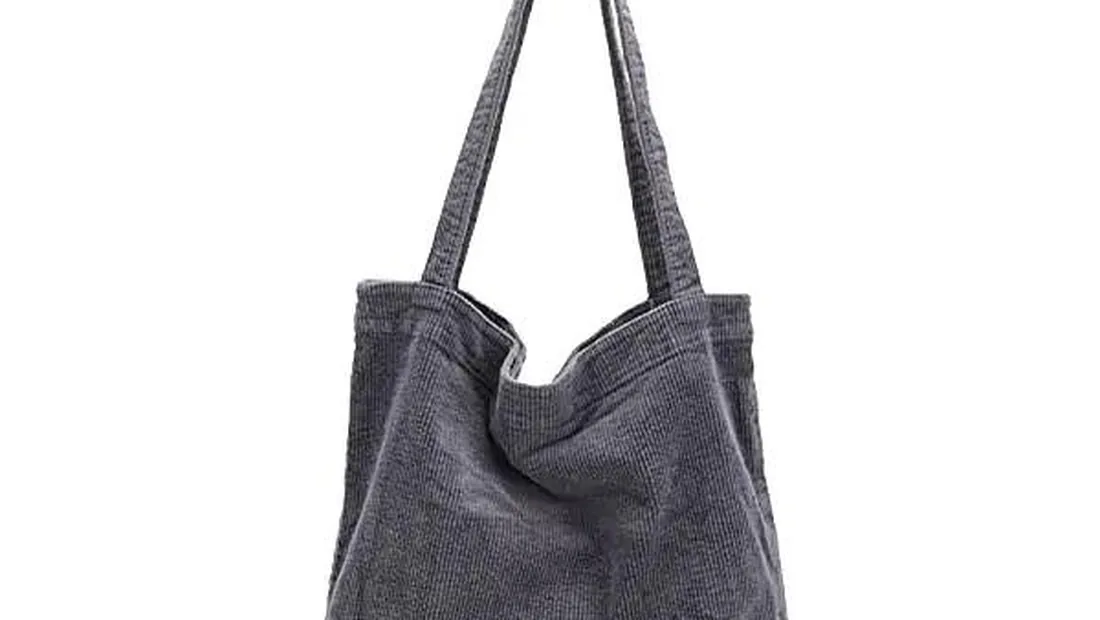
A custom drawstring pouch is a fabric bag closed by a cord running through a channel at the opening. Pull the cord, the mouth gathers, the contents stay in. That is the whole mechanism, and it is the reason these pouches get specified badly so often: the mechanism is simple enough that people assume the rest is simple too.
It is not. Say a brand owner needs a pouch for retail packaging. Say a promo agency needs one for a trade show giveaway. Say an events team needs one for a registration kit. Three different bags. Same three words on the purchase order.
This guide walks through what actually changes between them: fabric class, fabric weight, cord and closure hardware, decoration, sizing, sampling and bulk. If you want the shorter version first, the drawstring bag guide covers the basics, and the drawstring bags category page shows the shapes these specs produce.
Start With the Job, Not the Bag: What a Custom Drawstring Pouch Has to Do
Contents drive everything downstream. Not the artwork. Not the colour. The contents.
A pouch holding a folded t-shirt needs almost nothing: light fabric, a simple cord, a single-colour print. A pouch holding hardware, tools, or a bottle of liquid needs a different conversation entirely. Weight, sharp edges, moisture and abrasion risk all get decided before anyone opens a Pantone book. A pouch that holds a phone charger and a pouch that holds a wrench can look identical in a mockup and fail completely differently in the field.
How the pouch reaches the end user matters just as much. Flat-packed and shipped inside a retail carton, the pouch can be soft and unstructured. Filled on a packing line, it needs an opening wide enough for a hand or a dispenser, and a cord that does not tangle in the feed. Hung on a peg in a shop, it needs a header card, a hang hole or a grommet, and enough body to hold its shape on the hook instead of collapsing into a rag.
Here is the part buyers learn the hard way. A reference photo is not a spec. A photo shows one pouch, at one angle, under one light. It does not show fabric weight, channel width, stitch density, cord diameter or print placement tolerance. Send a photo to a drawstring bag supplier and you will get a quote for whatever that supplier sees in the picture. Send a written spec and you will get a quote for the bag you actually want. Those two quotes are rarely the same number, and the difference is usually discovered after the deposit.
Fabric Options for a Customised Drawstring Bag: Cotton Canvas, Nylon, Polyester and rPET
Four families cover most of the market.
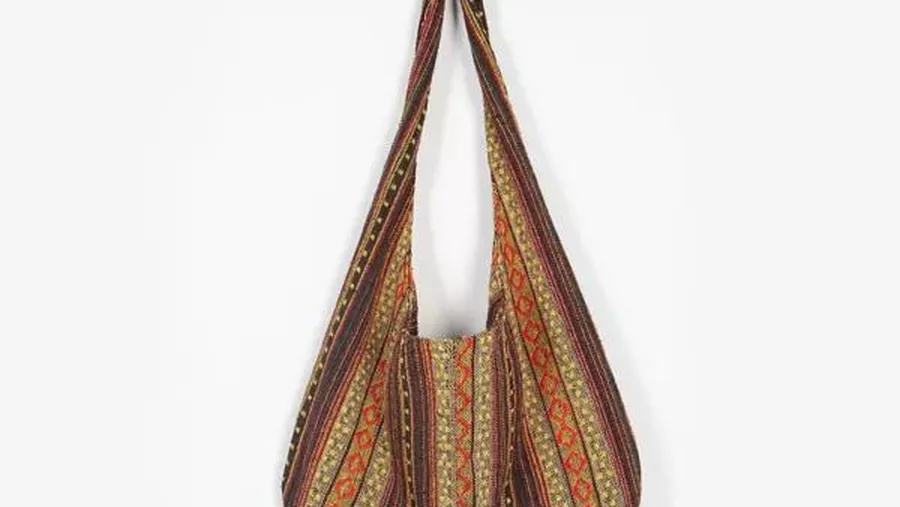
Cotton canvas and cotton duck give structure and a printable face. Duck is the tighter weave, with a smoother, firmer surface. Whether the finished pouch stands up on a shelf or slumps into a puddle depends on weight and weave, not on the word cotton. A heavier canvas holds a shape; a light one drapes. Neither is wrong. They just sell differently.
Nylon brings strength-to-weight performance and good abrasion resistance. Water resistance is a separate question, and it is decided by coating and weave rather than by the fibre name. A coated nylon shell behaves nothing like an uncoated one, even at the same weight. Buyers who ask only for "nylon" are leaving the most important variable unspecified.
Polyester is dimensionally stable, widely printable, and available across many weights, weaves and coatings. It takes screen print, digital print and dye sublimation well when the ink chemistry matches the fibre. For promotional work at volume, polyester is usually the path of least resistance.
Recycled content is real and available. rPET and recycled cotton both exist in the supply chain. The catch is documentation. A recycled-content claim should be tied to paperwork the supplier can actually provide, not to a line on a product page. Ask what evidence comes with the shipment before the claim goes on your packaging. If the answer is vague, treat the claim as unverified.
Reading Fabric Specs Like a Buyer: GSM, Denier, Ounce and Coating Weight
Three units get used for the same idea, and they do not convert cleanly.
GSM states mass per square metre. It applies to fabric, film, nonwoven and composite. Denier describes yarn linear density, and it does not by itself state finished-fabric strength. A high-denier yarn in a loose weave can be weaker than a lower-denier yarn in a tight one. Canvas, meanwhile, is usually quoted in ounces while synthetics are quoted in denier. The two are not interchangeable. Comparing them directly is a mistake that shows up in the sample, not the spreadsheet.
Coating weight is a separate line item from base fabric weight. Ask which number is being quoted. A supplier saying "600D" is describing yarn, not coating, not total mass, and not water resistance.
Thickness under a stated pressure, hand feel and colorfastness all affect how the pouch folds, sews, packs and survives handling. Colorfastness matters most on dark fabrics and on anything that will be rubbed against other goods in a carton.
| Fabric family | What it gives you | What to pin down in the spec |
|---|---|---|
| Cotton canvas / duck | Structure, texture, strong print face | Weight in ounces, weave, shrinkage allowance |
| Nylon | Strength-to-weight, abrasion resistance | Denier, coating type, coating weight |
| Polyester | Dimensional stability, easy printing | Construction (T or D), GSM, ink system |
| rPET / recycled cotton | Recycled-content story | Recycled percentage and supporting documentation |
Cord, Channel and Closure: Small Parts That Decide How the Pouch Feels
Single-cord and double-cord closures pull differently. A single cord runs through one channel and gathers one side. A double cord cinches from both sides and pulls tighter, and it reads as a more finished retail item. That difference is visible to a customer in about two seconds.
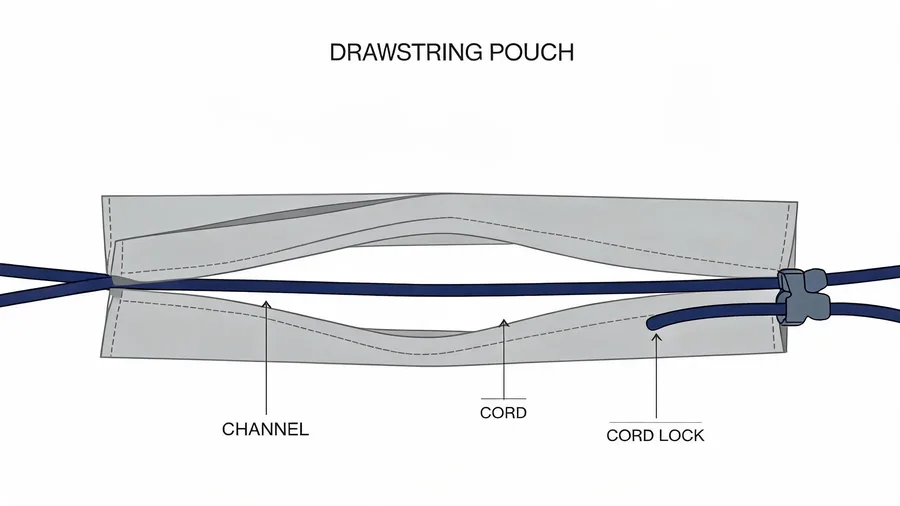
The hardware at the end of the cord changes both cost and experience. A simple knot is the cheapest option and works fine on a giveaway. A toggle or cord lock holds the drawcord at an adjusted position, which matters when the pouch is carried rather than stored. Cord locks add parts, and parts add assembly steps.
Channel width, stitch placement and reinforcement patches at high-stress attachment points are what stop the casing from blowing out under load. A channel that is too narrow for the cord will bind. A channel that is too wide lets the cord twist. Reinforcement at the points where the cord exits the channel is cheap insurance, and it is the first thing to disappear when a spec is trimmed for cost.
Grommets, D-rings and webbing are routing and attachment options worth specifying if the pouch will hang or clip. A grommet gives you drainage, ventilation or cord routing through a reinforced ring. A D-ring gives you a clip point. Neither belongs on a pouch that will only ever sit in a box, and both are worth the money on one that will live on a peg.
Decoration for Custom Printed Drawstring Bags: Choosing a Print Method
Screen printing forces ink through a prepared screen onto the material. It suits solid colours and repeat production when the substrate and ink system are compatible. It is the workhorse for promotional runs.
Digital textile printing deposits artwork by controlled inkjet. It supports detailed graphics and shorter runs, with ink chemistry selected for the fibre type. Gradients, photographs and multi-colour logos live here.
Dye sublimation is a polyester-family process. Disperse dye becomes a gas and bonds with suitable polyester surfaces under heat and pressure. It is not a universal method. On cotton it does not work the same way, and buyers who assume otherwise end up with a sample that looks nothing like the mockup.
Heat-transfer graphics, embroidery, woven and printed labels, debossing and embossing each carry their own validation needs. Adhesion, stretch, wash and abrasion performance have to be checked against the actual substrate, not assumed from a previous project. Embroidery on a light canvas panel can distort the panel if stitch density is not controlled. Small details, real consequences.
Sizing, Sampling and Bulk: How a Cinch Sacks Bulk Order Actually Runs
Flat width, height, gusset and fill volume should be specified together. A pouch that measures right can still be too shallow once filled, because a flat measurement says nothing about how the fabric opens when something is inside it. If the pouch has a gusset, state the gusset depth. If it does not, say so.
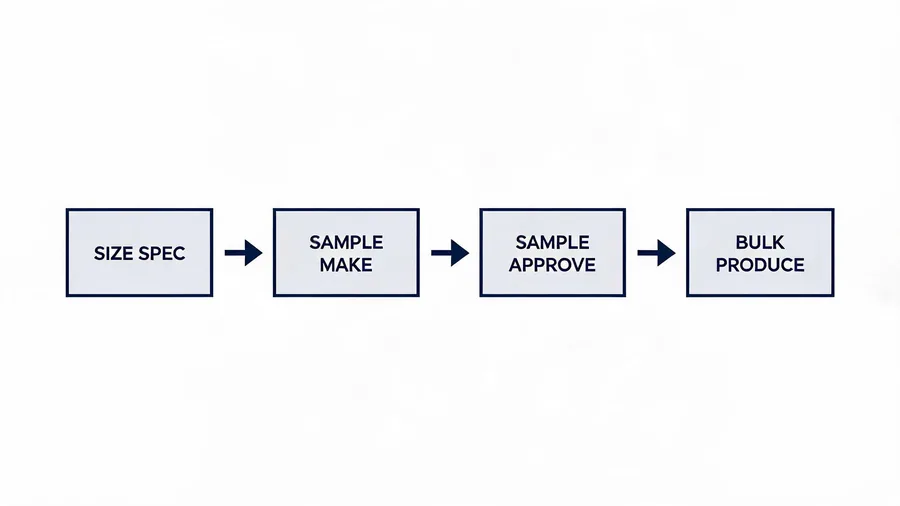
Sampling is a paid, iterative step. A first sample, then a revision round, then sign-off on the exact construction before bulk. Sampling runs about one to ten days, and a revision round adds two to three days. Bulk timing is confirmed with the quote, because it depends on fabric availability, decoration method and quantity. Anyone promising a bulk date before seeing the spec is guessing.
Approval gates are what stop a bulk run from repeating an unapproved detail. Artwork approval, material approval and pre-production sample approval are three separate checkpoints. Collapse them into one and a colour change made during sampling can quietly reach the production floor.
Low MOQs are available on drawstring pouches. Exact figures depend on fabric, size and decoration, so they are confirmed at quotation stage rather than published as a blanket number. For cinch sacks bulk orders, that conversation happens once the spec exists.
A spec sheet you can copy
- Fabric family and construction (for example, a stated denier or a stated ounce canvas)
- Fabric weight in GSM or ounces, plus coating type and coating weight if coated
- Colour reference, with a physical target rather than a description
- Dimensions: flat width, height, gusset depth
- Cord type, cord diameter, cord colour
- Closure hardware: knot, toggle or cord lock
- Channel width and reinforcement placement
- Print method, print placement, print size
- Packaging method
- Quantity, target ship window, destination
Writing the Spec Sheet You Send to a Drawstring Bag Supplier
Put all of the above in one document. One document, one SKU, one version number.
Attach artwork with a colour target and state the acceptable tolerance rather than describing the colour in words. "Warm red" means nothing on a factory floor. A reference number means something. State quantity, target ship window and destination so freight mode can be discussed early, because sea, rail, air and express each change the planning calendar.
Keep one version-controlled spec per SKU. This is the difference between a reorder that reproduces the first run and a reorder that drifts. Drift is slow, and it is usually invisible until a customer notices.
When the spec is ready, send it through the contact page for a quote. If you are still choosing between pouch and tote formats, the blog has related sourcing guides, and structured cases follow a similar spec logic on the custom suit bags page.
Frequently Asked Questions
Where can I get custom drawstring bags?
Most bag factories that run cut-and-sew production can make them, and so can promotional product suppliers who subcontract the sewing. The difference shows up in how the quote is built. A factory quotes from your spec: fabric, weight, dimensions, cord, closure hardware, print method and packaging. A reseller quotes from a catalogue photo and adds margin. If you want the pouch made to your own construction rather than picked from a range, send a written spec and ask for a sample before bulk.
What are drawstring pouches called?
The names overlap and none of them is strictly wrong. Drawstring pouch, drawstring bag, cinch sack, cinch bag, stuff sack and kit bag all describe a fabric bag closed by a cord through a channel. In promo and retail work, cinch sack usually implies a larger backpack-style bag with shoulder cords, while drawstring pouch usually means a smaller flat or gusseted bag for packaging and small items. When you brief a supplier, use the name plus dimensions and a description of the contents, because the name alone will not tell them which one you mean.
How do I make my own drawstring bag?
For a one-off, you need a fabric panel, a folded channel at the top, a cord and a way to thread it. For production, the sequence is different: choose the fabric family and weight, fix the dimensions including gusset depth, decide single or double cord, choose the closure hardware, pick a decoration method, then sample. The sample is where construction problems surface, which is why it is a paid step rather than a formality. A revision round after the first sample is normal and adds a few days.
Can recycled content in a drawstring pouch be verified?
It can be, but only if the documentation travels with the order. rPET and recycled cotton are both available in the supply chain, and a recycled-content claim should be tied to paperwork the supplier can actually provide rather than to a line on a product page. Ask what evidence comes with the shipment before the claim goes onto your packaging. If the answer is vague or the certificate cannot be produced on request, treat the claim as unverified.