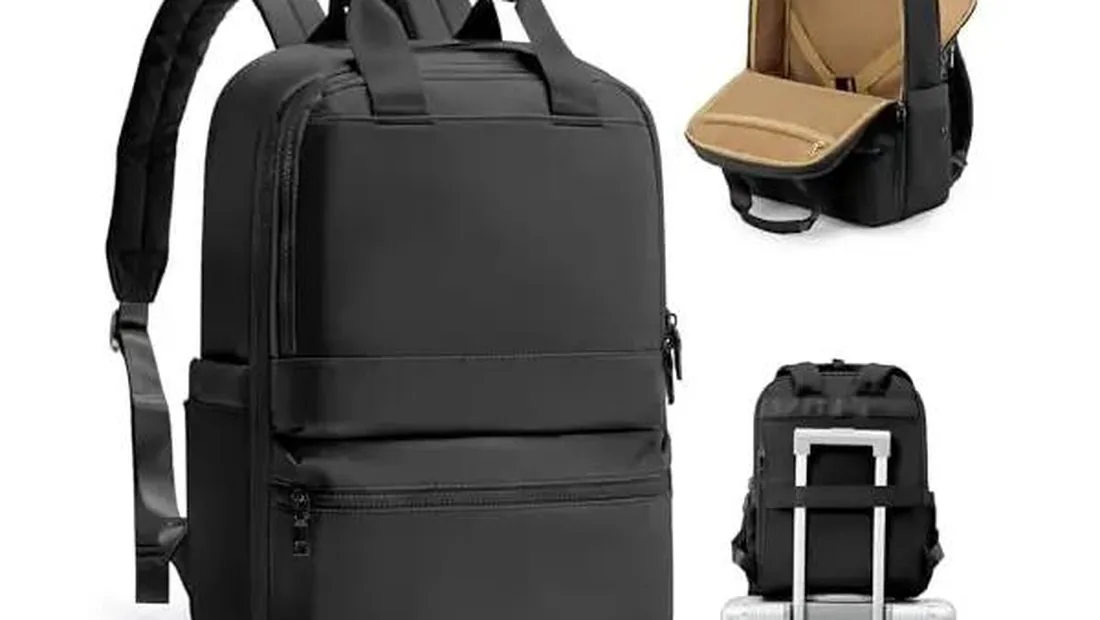
A bag tech pack is the document that decides whether your sample comes back right. It is the controlled product specification. Dimensions, materials, construction details, artwork, labels, packaging, and test requirements all live in this one file. When a factory quotes from a loose email thread, you get guesses. When they quote from a tech pack, you get a bag.
I've watched buyers send a photo and a sentence. Then they're surprised when the sample has the wrong gusset depth or a zipper that catches. The tech pack is where that gets fixed before cutting starts. This guide walks every section we ask for at the OEM/ODM bag factory level.
Product Name and Intended Use
This sounds obvious. It isn't. "Laptop backpack" tells us nothing. "17-inch commuter backpack for rail travel, target user 25-45, maximum recommended load 8 kg" changes the foam spec, the strap geometry, and the bottom panel reinforcement. The product name should be specific enough that two factories quote the same bag. Intended use drives the test plan. A cooler bag that sits in a car has different seam requirements than one carried across a beach.
Write the target user. Write the carried load. Write the environment. If the bag must fit under an airline seat, that is a critical dimension, not a preference.
Dimension Diagram with Measurement Points and Tolerances
Every dimension needs a reference point. Height is not "about 45 cm." Height is the vertical finished dimension measured from the bottom panel seam to the top edge of the front panel, with the bag empty and laid flat. Width is the horizontal finished dimension across the front panel at the widest point. Depth is the front-to-back measurement controlled by the gusset. Opening length is the usable zipper length, not the tape length.
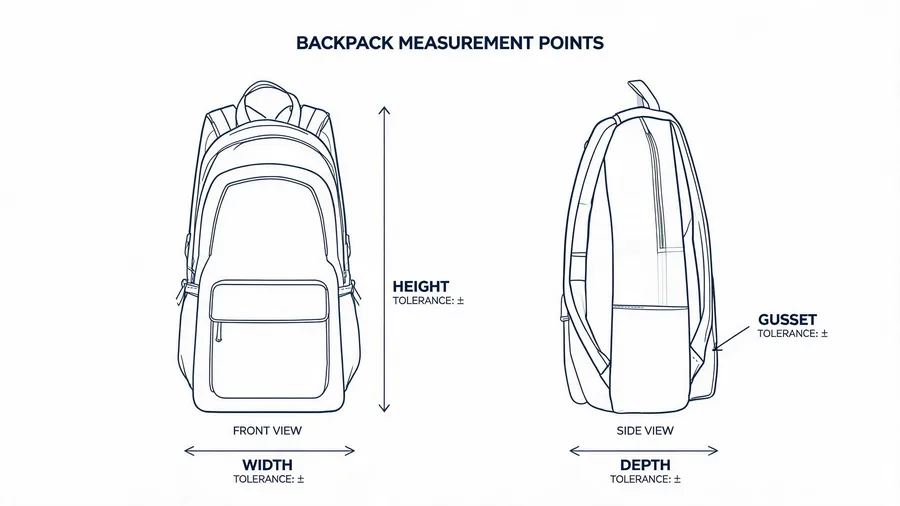
The diagram should mark each point with a letter or number. Then the table lists A, B, C with nominal values and tolerances. A tolerance is the permitted variation from the nominal value. A critical dimension is one that affects fit, function, component compatibility, or safety. The laptop sleeve width is critical. The hang tag length is not.
Nominal is the target. Tolerance is the allowed drift. If the sleeve is 40 cm nominal with ±0.5 cm tolerance, a 40.4 cm sleeve passes. A 39.2 cm sleeve fails. Buyers who skip tolerances get arguments later. The factory measures one way, the buyer measures another, and nobody has a written rule to settle it.
Capacity and Load
Capacity is internal volume in liters, measured by a defined method. The method matters because a bag can be measured full to the zipper or full to a practical packing line. State which. Maximum recommended load belongs in the same block. A 20 L daypack with a 3 kg load limit is a different product than a 20 L pack rated for 8 kg.
Material Composition and Construction
Every shell, lining, webbing, foam, and coating goes in this section. The spec sheet needs material composition, construction, weight, thickness, coating, finish, and the approved color. Nylon 420D means something. Nylon 420D with a PU backing means more. Nylon 420D with a PU backing and a matte finish means enough to cut a sample.
Our bag product lines run across nylon from 110 to 280 g/m², polyester from 190T to 1200D, canvas from 8 to 15 oz, and rPET where the buyer specs it. That spread exists because a drawstring bag and a checked duffel are not the same animal. The tech pack pins down which one you want.
For insulated bags, the foam type and thickness belong here. Closed-cell PE, XPE, or EVA foam from 8 to 15 mm. The liner material gets its own line. Aluminum PET liner cuts radiant heat roughly half. A PU or PVC coating at 3000 mm or a TPU lamination at 10,000 mm changes seam sealing requirements downstream.
Complete Bill of Materials
The bill of materials is the structured list of every material, component, quantity, color, and supplier reference for one product. It includes hardware sizes and finishes. A #5 zipper is not a #8 zipper. Matte black hardware is not gunmetal. The BOM is where those distinctions live.
A typical backpack BOM runs fifty to eighty lines. Shell fabric, lining fabric, webbing by width, foam by thickness, zipper by gauge, slider, puller, thread, binding, interlining, buckles, D-rings, bar tacks, labels, and the polybag it ships in. Each line has a quantity and a unit. Skip a line and the factory substitutes. Substitution is where samples go wrong.
Panel Map and Pattern Revision
The panel map shows every pattern piece and how they assemble. Front panel, back panel, side panel, bottom panel, gusset, dart, facing. Each piece gets a name and a revision. When the buyer changes the sleeve width, the revision moves from A to B. The pattern revision is the only reliable way to know which version of the bag we're all talking about.
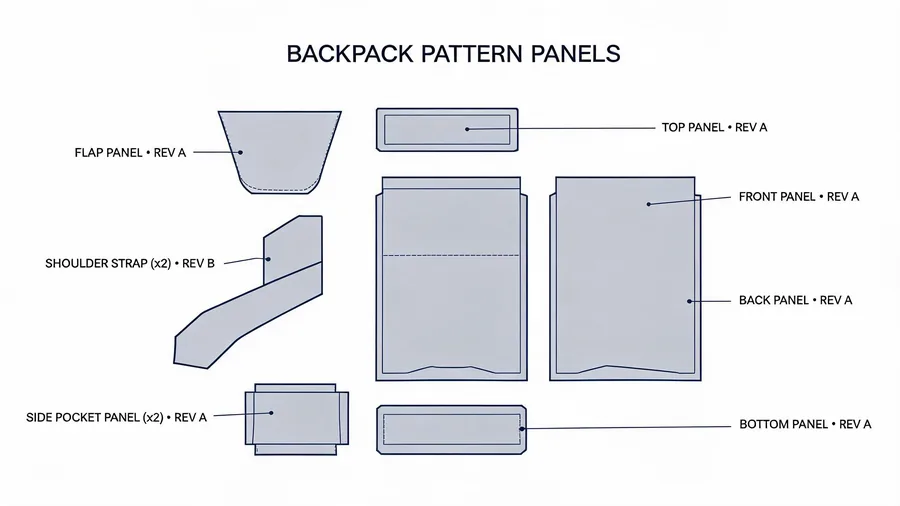
Grain direction belongs on the map. A panel cut off-grain stretches differently. Seam allowances go on the map too. The material width between the cut edge and the stitch line affects how the bag sits. Notches mark where panels align. A missing notch means the gusset gets sewn on crooked.
Seam Types, Allowances, and Stitch Density
Seams are not all the same. Turned construction hides seam allowances inside. Bound-seam construction covers them with binding. Box construction creates a rectangular cavity. A dart creates curvature. The tech pack names the seam type for every join.
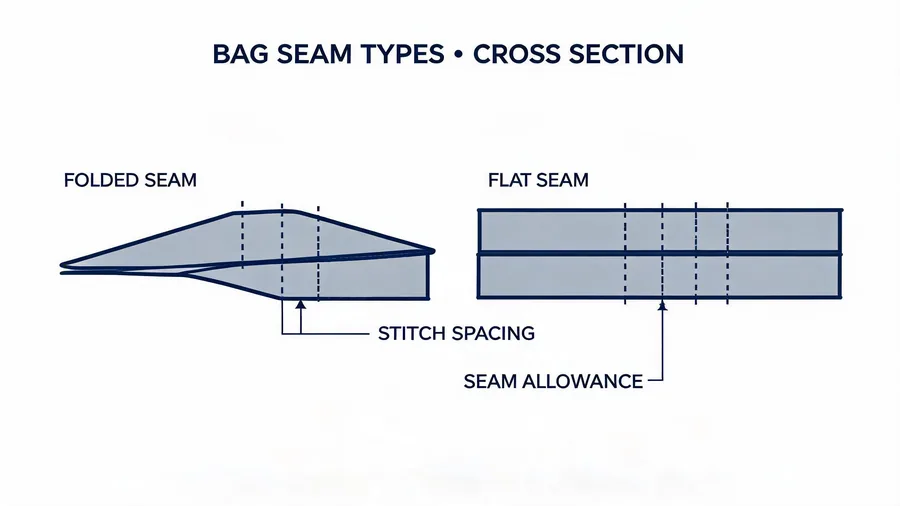
Stitch density is measured in stitches per inch. It affects seam appearance, flexibility, and performance. A higher count is not automatically better. It can perforate coated fabrics and weaken the seam. The right count depends on the material and the load path. State it.
Reinforcement belongs here too. Bar tacks at stress points. Box-X stitches at webbing attachments. The lower strap anchor on a backpack carries more pull force than most buyers expect, especially when someone lifts the bag by one strap. That anchor needs a spec, not a hope.
Pocket, Lining, and Closure Construction
Every pocket gets a line. Pocket opening width, depth, closure type, and whether it sits inside or outside the main compartment. A laptop sleeve needs its own foam thickness and suspension method. Does the sleeve hang from the top seam or sit on the bottom panel? That changes drop protection.
The main closure gets its own spec. Zipper type, gauge, direction, and puller. A waterproof zipper changes the seam sealing plan. A roll-top closure changes the panel map entirely. The lining construction includes interlining where structure or padding is needed.
Artwork Placement and Process
Artwork dimensions, placement coordinates, process, colors, and durability requirements all go in one block. A logo at 6 cm wide on the front panel center is a coordinate. A logo "somewhere on the front" is a conversation you'll have again after the sample.
The process matters as much as the placement. Embroidery, screen print, heat transfer, woven label, metal plate, deboss. Each has different MOQs and different durability. Our custom backpack program sees logo MOQs from 50 pieces for hidden placement up to 1000 for reflective or interchangeable systems. The tech pack locks the process so the quote matches the sample.
Label Content and Placement
Labels are small. They also cause the most rework in a first order. The tech pack specifies label content, placement, care instructions, and traceability code requirements. Country of origin, fiber content, care symbols, and the buyer's own branding all need a line.
Placement is not decorative. A care label sewn into the main seam is invisible and comfortable. A care label sewn into the strap seam chafes. The tech pack says which seam and which side. Traceability codes matter for buyers who run multiple SKUs and need to track a batch back to a production date.
Performance Test Methods and Acceptance Limits
This is the section buyers skip and regret. The tech pack names the test methods, conditioning, sample size, acceptance limits, and report format. Abrasion, colorfastness, seam strength, zipper durability, water resistance, and load testing all belong here.
Acceptance limits are not a pass/fail guess. They are the agreed threshold for each test. A cooler bag liner might need to hold ice for a stated duration under stated ambient conditions. The exact value depends on the agreed specification. What matters is that it's written down before production, not argued about after delivery.
Sampling plans follow AQL, the acceptance quality limit. The sample size and acceptance numbers come from the sampling plan agreed in the spec. Defect classification assigns critical, major, or minor severity. A broken strap anchor is critical. A loose thread is minor. Both need a written rule.
Packing Method and Carton Marks
Packing is part of the product. Polybag requirements, shape-control inserts, carton quantity, carton marks, and shipping tests all go in the tech pack. A backpack shipped without a shape insert arrives creased. A carton with the wrong marks gets held at the warehouse.
Carton marks include the buyer's item number, quantity, color, and destination code. Shipping tests confirm the carton survives the journey. The packing method also affects landed cost. A carton that holds 20 bags instead of 24 changes the freight math.
Change Control After the First Order
Change control is the documented approval process for revisions. Materials, patterns, construction, artwork, tests, or packaging all fall under it. After the first order, a buyer changes the lining fabric. Without change control, the factory might quote the old BOM, cut the old pattern, and ship a bag that's half new and half old.
Every revision gets a number, a date, and an approval. The golden sample from order one is the physical reference. When order two starts, the factory compares workmanship against that sample. If the tech pack changed, the golden sample changes too. That is how you keep order seven looking like order one.
Checklist Table
| Section | What it must contain | Common omission |
|---|---|---|
| Product name and use | Specific name, target user, intended use, max load | Vague name like "travel bag" |
| Dimension diagram | Measurement points, nominal values, tolerances | No tolerance column |
| Materials | Composition, weight, coating, finish, approved color | Missing coating or backing |
| Bill of materials | Every component with quantity, color, supplier ref | Hardware sizes left blank |
| Panel map | Pattern pieces, grain direction, notches, revision | No revision tracking |
| Seams | Seam type, allowance, stitch density, reinforcement | No stitch count |
| Pockets and closure | Opening dimensions, construction, closure spec | Laptop sleeve suspension method |
| Artwork | Dimensions, coordinates, process, durability | No placement coordinates |
| Labels | Content, placement, care instructions, traceability | Missing traceability code |
| Testing | Methods, conditioning, sample size, acceptance limits | No acceptance threshold |
| Packing | Polybag, inserts, carton quantity, marks, ship tests | No carton marks |
A tech pack is not a marketing document. It is the engineering spec that keeps your sample and your production run honest. Send us a photo and a wish, and we'll ask for the pack. Send us the pack, and we'll cut the sample. If you're not sure where to start, contact our team and we'll walk you through the template we use for every bag sourcing project.
Frequently Asked Questions
What is the difference between a spec sheet and a tech pack?
A spec sheet defines dimensions, tolerances, materials, workmanship, performance, and packaging. A tech pack is the full controlled specification, including the bill of materials, panel map, artwork, labels, and test requirements. The tech pack is the bigger document.
How long should a bag tech pack be?
Long enough to remove every guess. A simple drawstring bag might be three pages. A 17-inch commuter backpack with laptop sleeve, multiple pockets, and custom artwork can run ten to fifteen pages. The test is whether two factories could quote the same product from it.
Can I send a photo instead of a tech pack?
You can, but the sample will reflect the factory's assumptions. A photo shows the outside. It doesn't show foam thickness, seam allowance, zipper gauge, or the laptop sleeve suspension. A photo plus a tech pack gets you the bag you pictured.
What happens if I change one material after the first order?
That is a change control event. The revision gets documented, approved, and applied to the pattern, BOM, and golden sample. Without that step, the factory may mix old and new specs in the same run.