Finding a Chinese bag manufacturer is easy, but vetting one takes work because you can fill a spreadsheet with supplier names in an afternoon while separating a real factory from a trading company takes questions, proof, and knowing what a good answer sounds like.
We run a bag factory in Yiwu. We've answered these questions for buyers across many markets. This guide is the advice we give before any deposit changes hands. It's written for sourcing managers and brand owners who need to make a decision, not for people who want a brochure.
How to confirm you're dealing with a real factory
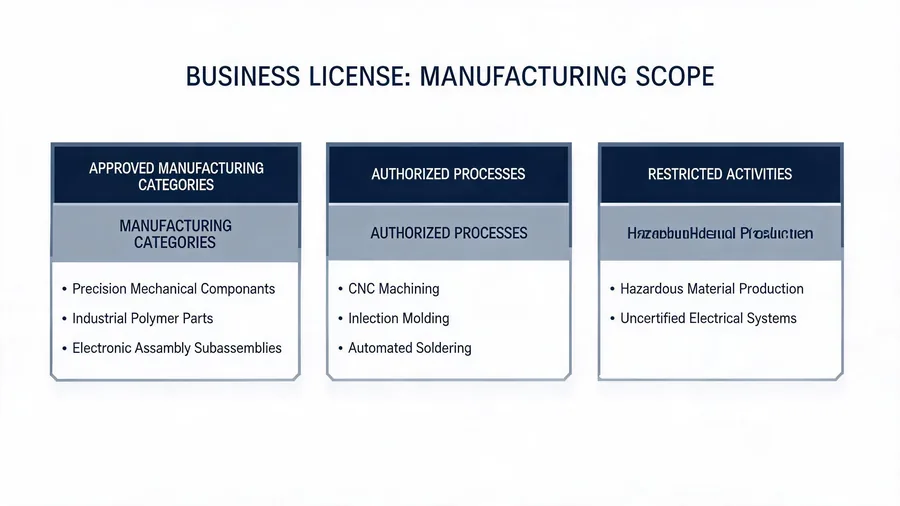
Ask for the business licence because every legitimate manufacturer in China has one, and it states the registered business scope. If the scope says trading or import and export but not manufacturing, you're talking to a middleman. Some trading companies are excellent at what they do. But if you want factory-direct pricing and direct communication with the people who sew your bags, you need the scope to say manufacturing.
Ask for audit reports, not logo images, because a real BSCI or ISO 9001 audit produces a report with a date, an audit firm name, and a scope. Ask to see the summary page. If the supplier sends you a jpeg of a certificate with no report behind it, that's a soft signal. It might be real. It might be borrowed. Ask for the document.
Ask for a live video walk-through because this is the single most useful check. A real factory can point a phone at the sewing floor within minutes. You should see rows of machines, workers at stations, fabric rolls, cutting tables. A trading company will stall. They'll promise a video tomorrow, then next week, then after the holiday. If you can't get a live walk-through of the production floor, you don't have a factory.
Red flags are not subtle, which means vague answers about where production happens, a refusal to share the audit report, or a salesperson who has never been to the factory floor are all warnings. In some cases, invoice or licence details may not match what you expect, so confirm the company name carefully. Any one of these is a reason to pause. Two of them is a reason to walk.
Camytonc operates a BSCI-certified factory with a factory area of over 30,000 square meters and more than 50 automated production lines, so we'll show you the floor and share the audit summary because we know what a buyer is really asking: are you who you say you are?
Sampling as a test of the factory
A sample is not a product; rather, a sample is a test of the factory's systems because you're testing materials, construction, communication, and attention to detail all at once. A good pre-production sample should confirm the fabric weight, the zipper brand, the stitching density, the logo placement, and the interior construction. If any of those are wrong, the bulk order will be wrong too.
Paid samples are normal because a factory that builds a custom sample has to buy materials, cut patterns, and pay a sewer for time. If a supplier offers free samples for a 500-piece custom order, be suspicious. Either they're hiding the cost in the unit price, or they're not making the sample themselves. We charge for samples. Sampling takes 1 to 10 days depending on complexity. One revision round takes 2 to 3 days. You should expect to pay, and you should expect a clear timeline.
How the factory handles revisions tells you more than the first sample does because a good factory sends photos of the revision, confirms the change in writing, and updates the spec sheet. A bad factory says yes to everything and changes nothing. When you get the revised sample, check every point you raised. Every single one.
Use the sample to test communication too. Did they answer your questions in full? Did they flag a problem before you found it? A factory that catches a construction issue during sampling and proposes a fix is worth more than a factory that ships a perfect sample by luck. You're not buying a sample. You're buying a relationship that will survive 12 months of production.
How to read a bag manufacturing quotation
A quotation is not a price because a quotation is a list of decisions, and the unit price is only one line. You need to see tooling, packaging, and freight terms broken out separately. If the quote is one number in an email, you don't have a quote. You have a guess.
Tooling matters because custom hardware, embossed zipper pulls, custom woven labels, and new cutting dies all cost money. Some factories amortize tooling into the unit price. Others charge it as a one-time line item. Ask which. If tooling is amortized, ask what happens to the dies if you leave. You paid for them. You should own them.
Packaging changes the price more than most buyers expect because a poly bag costs almost nothing, while a color box adds structure and printing, and a gift box with a handle bag adds another layer. A branded poly mailer is a middle option. We offer six packaging options, and the difference between the cheapest and the most expensive can be significant on a 1,000-piece order. Ask for the packaging cost as a separate line. Don't let it hide inside the unit price.
What's not included? Freight. Import duties. Customs clearance. Inland trucking in your country. Some quotations include FOB, some include EXW. Ask which. Ask what happens to the price if the fabric supplier raises prices between quotation and production. A transparent factory will tell you the quotation is valid for 30 days and subject to material confirmation. A vague factory will say the price is final and then send a revised invoice later.
Transparent pricing matters more than the lowest unit price because a factory that itemizes tooling, packaging, and freight is a factory that understands how buyers make decisions. A factory that gives you one number and says trust me is a factory that will own you later.
Contract terms that protect the buyer
The contract is where you protect yourself, so don't pay 100 percent upfront because a standard structure is a deposit to start materials, a second payment at mass production approval, and the balance before shipment. Some buyers push for a portion after delivery. That's harder to get, but it's worth asking for.
Inspection rights belong in the contract so that you have the right to send a third-party inspector to the factory before shipment. You should also have the right to reject the shipment if the inspection fails. If the contract says you must accept whatever the factory ships, you have no leverage.
Defect remedy needs to be specific because you need to know what happens if 8 percent of the bags have broken zippers or if the logo is printed in the wrong position. The contract should state whether the factory replaces, credits, or repairs. It should state the timeline. It should state who pays for return freight. Vague language like reasonable quality is not protection. Specific language is.
Change control is the clause most buyers forget, which means if you change the fabric after the sample is approved, the price and the lead time change. That should be documented. If the factory changes the zipper supplier without telling you, that is a material change. The contract should require written approval for any change to materials, construction, or artwork. Without that clause, you're buying one bag and receiving another.
Pre-shipment inspection and AQL explained
A pre-shipment inspection happens after production is finished and before the goods are packed and shipped, so an inspector pulls a sample from the finished cartons and checks it against the approved golden sample and the spec sheet. They check dimensions, stitching, zipper function, logo placement, color, and packaging. They count defects.
AQL is a sampling concept, which stands for Acceptance Quality Limit, and it's not a test but a way to decide how many pieces to inspect and how many defects are acceptable before you reject the lot. The exact AQL level and sample size depend on your order size and your risk tolerance. We don't set those numbers for you. You set them in the specification, or you ask a third-party inspection company to set them.
Defects are classified into three levels. Critical defects make the product unsafe or unusable. A broken strap anchor on a backpack is critical. Major defects affect function or appearance enough that a customer would return the item. A zipper that sticks is major. Minor defects are small imperfections that most buyers would accept. A loose thread is minor. The classification matters because your AQL acceptance number is different for each level.
Third-party inspection is a reasonable buyer request, and any factory that refuses it is hiding something, so we welcome it. The inspector comes, they pull cartons, they check the bags, and they send you a report with photos. You pay for the inspection. Inspection costs vary by scope and location; ask your inspection company for a quote. It's the cheapest insurance you'll ever buy.
Buyer checklist: questions, good answers, and red flags
Here's the checklist. Print it. Use it on your next three supplier calls. A good answer is specific, documented, and immediate. A red flag is vague, delayed, or absent.
| Question to ask | What a good answer looks like | Red flag |
|---|---|---|
| Can you share your business licence? | Sent within 24 hours, scope includes manufacturing | Scope says trading, or licence never arrives |
| Can you share your BSCI or ISO 9001 audit report? | Summary page with date, audit firm, and scope | Only a logo image, or report is years old |
| Can you do a live video walk-through of the sewing floor? | Yes, within days, shows machines and workers | Excuses, delays, or a pre-recorded video |
| How much is the sample, and how long does it take? | Clear price, 1 to 10 days, paid sample | Free sample with no explanation, or no timeline |
| What is included in this quotation? | Unit price, tooling, packaging, freight terms | One number in an email with no breakdown |
| What are the payment terms? | Deposit, milestone payment, balance before shipment | 100 percent upfront, or no contract |
| Can we send a third-party inspector before shipment? | Yes, and the contract gives rejection rights | Refusal, or the contract has no inspection clause |
| What happens if defects exceed the agreed limit? | Specific replacement, credit, or repair terms | We will handle it, no written terms |
Use the checklist before you commit to an order. Not after. A buyer who asks these questions on the first call saves themselves six months of pain. A buyer who skips them learns the hard way.
Camytonc has been operating since 2013. We have 500+ workers and 100+ designers. The factory has a monthly output capacity of 150,000 units, with warehouses holding more than 3,000,000 items. We offer sea, rail, and air freight, with small-batch express delivery via DHL, FedEx, UPS, or TNT in 5 to 7 working days, and sea freight in 40 to 45 days. Our category-specific MOQs include 500 pieces for makeup bags, 500 pieces for cooler bags, and 50 pieces for leather-spliced woven bags. If you're ready to start a conversation, contact us or browse our product categories. You can also learn more about our OEM and ODM process.
Frequently Asked Questions
Where can I find wholesale Chinese handbags?
You can find wholesale Chinese handbags through B2B platforms, trade shows, and factory directories. But finding a supplier is not the same as vetting one. Ask for a business licence with manufacturing scope, an audit report summary, and a live video walk-through of the sewing floor before you pay a deposit. A real factory will show you these things. A trading company will hesitate.
How do I verify a Chinese bag manufacturer before placing an order?
Ask for four things: the business licence showing manufacturing scope, an audit report summary such as BSCI or ISO 9001, a live video walk-through of the production floor, and a pre-production sample that matches your spec. Check how they handle sample revisions and whether they itemize tooling and packaging in the quotation. A good factory answers quickly and with documents. A bad one stalls.
What is the typical MOQ for custom bags from a Chinese factory?
MOQs vary by category and material. For example, makeup bags and cooler bags often start around 500 pieces. Woven bags with leather splicing can start as low as 50 pieces. Special fabrics or complex backpacks may require 1,000 pieces or more. Always ask for the MOQ in writing, and ask whether it changes by color or by material.
What inspections should I request before a bag shipment leaves the factory?
Request a pre-shipment inspection by a third-party company. The inspector checks dimensions, stitching, zipper function, logo placement, color, and packaging against your approved golden sample. They classify defects as critical, major, or minor using an AQL sampling plan you agree on in the contract. You should also have the right to reject the shipment if the inspection fails.