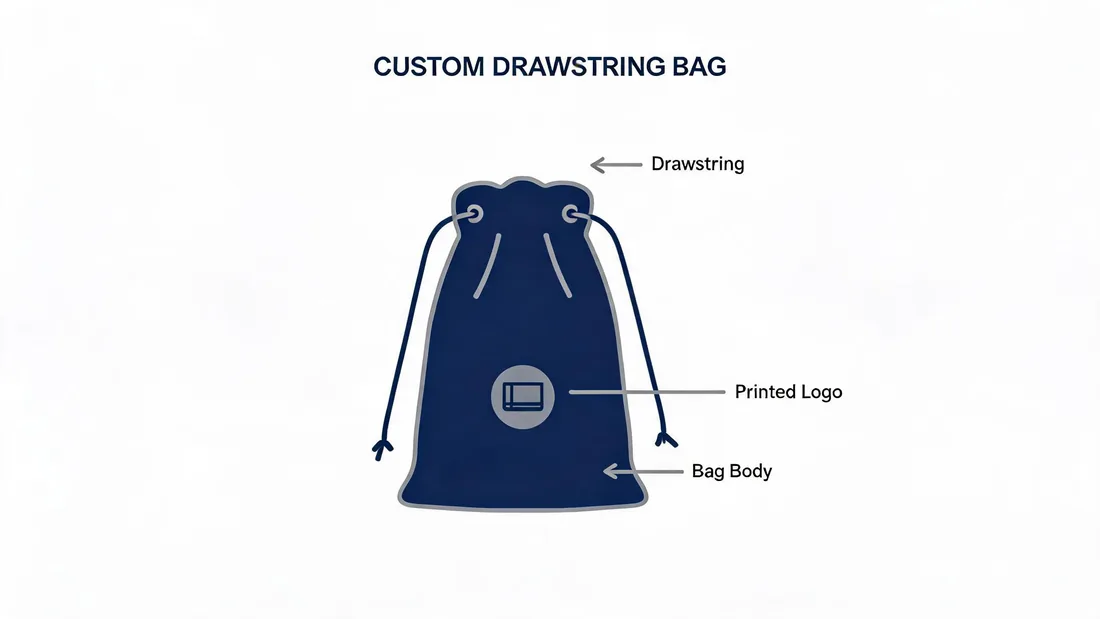
Custom clothing packaging bags do three jobs at once. They protect a garment between the sewing line and the customer, they carry the brand at unboxing, and in the right format they become something the buyer keeps and reuses. That third job is why apparel brands keep moving away from plain poly and toward drawstring pouches, zip bags and dust bags.
Say a mid-size label is launching a knitwear drop. The garment tech pack already lists fabric, trims and labels. The packaging bag is usually specified in the same document, or in a parallel one, because it has to be produced in parallel. Nobody wants a finished order sitting in a warehouse waiting on pouches.
What Custom Clothing Packaging Bags Actually Do in a Garment Supply Chain
Picture the order flow. The garment is confirmed, the packaging is confirmed, and both move through sampling at the same time. Packaging is lighter and faster to sample, so it often clears approval first. Then it gets packed either at the garment factory, right after finishing and inspection, or at a fulfilment centre if the brand holds stock and packs to order.
Three jobs, again, because they pull the spec in different directions.
- Transit protection. Dust, moisture, handling, and the abrasion of a garment rubbing against a carton wall for weeks.
- Unboxing presentation. What the customer sees when the mailer opens. Print fidelity, hand feel, and whether the bag looks cheap next to the product.
- Reuse. A pouch that survives the first unboxing and gets used for shoes, laundry, or travel is free repeat advertising.
The format changes with the shipping route. A folded garment going to a retailer's distribution centre needs a flat, stackable bag. A direct-to-consumer order needs something that photographs well and survives a courier. A garment that hangs on a rail needs a cover, not a pouch, and that is a different product entirely.
Choosing Between Drawstring Pouches, Zip Bags and Dust Bags
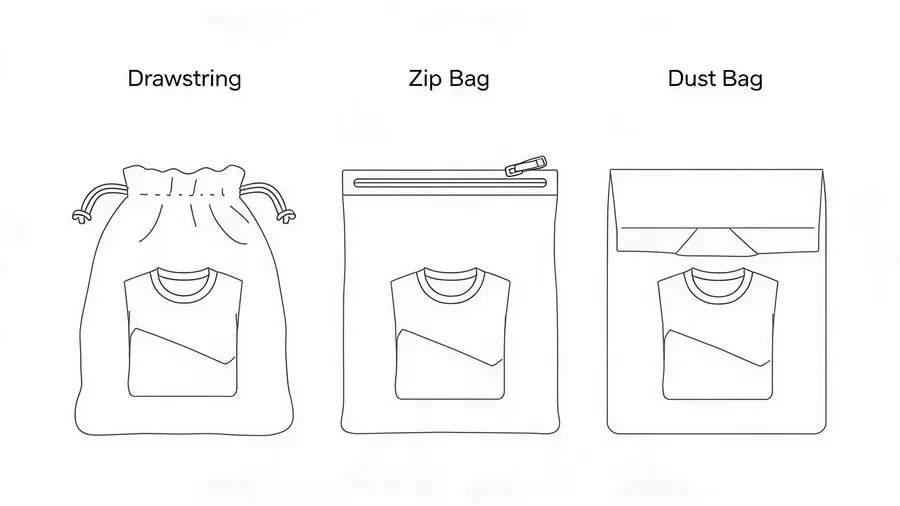
These three formats cover most apparel packaging, and buyers mix them within one brand. A premium line gets pouches. Basics get zip bags. Outerwear gets a cover.
Drawstring pouches
A drawstring pouch is a soft, reusable format. It suits premium apparel, gift-with-purchase, and anything where the bag is part of the product experience. Cotton, canvas, and rPET are common substrates. The closure is a cord or ribbon running through a channel, sometimes with a toggle. It is the slowest format to pack by hand, so it suits lower volumes or higher price points.
More on construction and formats sits on the drawstring bags page.
Zip and resealable bags
Custom zip bags for clothes are the workhorse. A folded garment slides in, the zip closes, and the bag keeps dust and moisture off during storage and transit. Clear film versions let a retailer see the garment without opening the bag, which matters for stockrooms and returns. Fabric versions with a nylon zip feel more premium and last longer.
The trade-off is honest. Film is cheaper, lighter, and shows the product. Fabric costs more, prints better, and gets reused. Neither is wrong. It depends on whether the bag is a cost line or a brand asset.
Dust bags and covers
A dust bag is a storage format. It is usually fabric, often with a drawstring or a flap, and it lives in a wardrobe rather than a carton. Garment covers, sometimes called suit bags, protect hanging items and are a separate category. If the garment hangs on a rail at any point, a cover is the right answer. The garment bags page covers that format.
Poly and film still win on cost and visibility for high-volume basics. That is not a failure of ambition. It is a correct call for a product that ships folded in bulk.
Fabric or Film? Matching Material to the Job
The substrate decides almost everything downstream: how it prints, how it feels, how long it lasts, and what it costs.
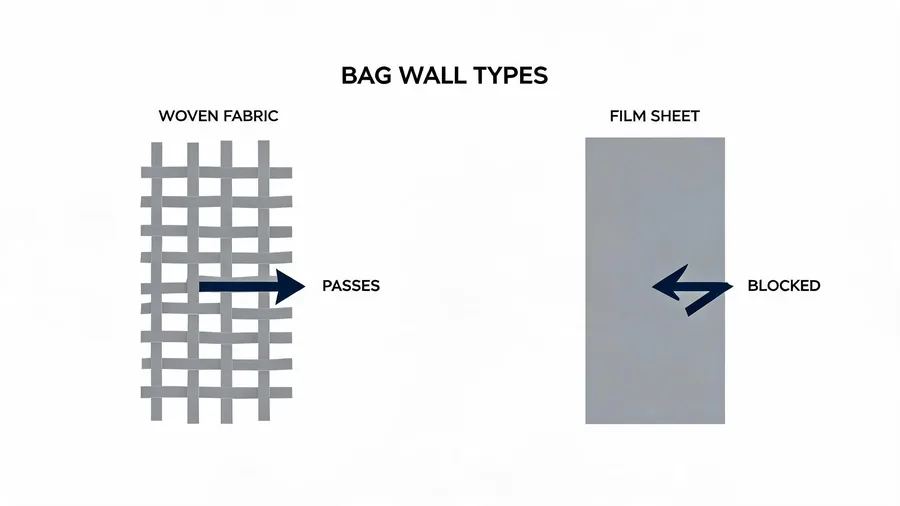
Woven and nonwoven fabrics carry structure and hand feel. Canvas and cotton duck are dense and durable, good for pouches that need to stand up. Polyester and nylon are lighter and print well; nylon brings high strength-to-weight and abrasion resistance, though coating and weave do most of the work on water resistance. Ripstop uses a grid of reinforcement yarns to limit tear propagation, which matters if the bag gets abused. Nonwoven is bonded fiber rather than woven, and it is the low-cost option for liners, backing and lightweight pouches.
Films and laminates carry the barrier. Transparent film gives visibility and a wipe-clean surface. PE, EVA and TPU films give moisture resistance and low weight. TPU is the flexible one used in welded, waterproof constructions. BOPET film turns up in reflective laminates and barrier builds.
Recycled content is available, and rPET is the usual route. It behaves like virgin polyester in most packaging applications, and buyers increasingly ask for it by name.
Specification language is where buyers get lost. Expect to see denier, GSM, coating weight, thickness, hand feel and colorfastness on a proper spec sheet. Denier describes yarn linear density, not finished-fabric strength. GSM is mass per square meter. Coating weight is the mass of coating per unit area, or total coated-fabric mass, depending on how the spec defines it. Thickness is measured under a stated pressure, which matters for folding and sewing. Hand feel covers softness, stiffness and drape. Colorfastness is resistance to color change or transfer during rubbing, washing, light exposure or moisture contact.
| Format | Typical substrate | Print fidelity | Reuse life | Best fit |
|---|---|---|---|---|
| Drawstring pouch | Cotton, canvas, rPET, nonwoven | High on fabric | Long | Premium, gift, retail |
| Zip bag (fabric) | Polyester, nylon, ripstop | High | Long | Premium folded apparel |
| Zip bag (film) | PE, EVA, transparent film | Medium | Short | Bulk folded basics |
| Dust bag | Nonwoven, cotton, polyester | Medium | Medium to long | Storage, footwear, accessories |
| Garment cover | Nonwoven, PE film, nylon | Low to medium | Short to medium | Hanging garments, retail rail |
Print and Logo Methods for Branded Packaging Bags
Screen printing forces ink through a prepared screen onto the material. It is the standard for solid colors and repeat production when the substrate and ink system are compatible. Digital textile printing deposits ink by controlled inkjet and handles detailed graphics and shorter runs, with ink chemistry chosen for the fiber type. Dye sublimation turns disperse dye into gas that bonds with suitable polyester under heat and pressure, which is why it works on polyester and not on cotton.
For a raised or sewn mark, embroidery stitches thread into the material. It is durable and reads as premium, but backing, needle selection, stitch density and panel distortion all need control. Woven labels create the design by interlacing yarns, and printed labels carry care, composition, origin, size and identification information. Thermal-transfer labels handle variable data like size or batch codes.
Heat-transfer graphics apply a prepared graphic with heat and pressure. Adhesion, stretch, wash and abrasion performance have to be validated on the actual substrate. Debossing forms a recessed mark with pressure, sometimes with heat. Embossing forms a raised or textured mark.
The substrate decides which of these are viable. You cannot dye-sublimate a cotton pouch. You cannot screen print fine detail on a textured nonwoven. Pick the material first, then the print method, not the other way round.
Writing a Packaging Spec a Factory Can Quote From
This is where most packaging projects stall. A buyer sends a reference photo and a rough size. The factory cannot quote it properly, so it guesses, and the guess is wrong.
The documents that carry a spec are the tech pack, the bill of materials, the specification sheet and the color standard. The tech pack holds dimensions, materials, construction details, artwork, labels, packaging and test requirements. The bill of materials lists every material, component, quantity, color and supplier reference for one product. The specification sheet defines dimensions, tolerances, materials, workmanship, performance and packaging. The color standard is the approved physical or digital reference used to judge production color.
Then the approvals that de-risk the run. A lab dip is a small dyed material sample submitted for color approval before bulk. A strike-off is a printed sample used to approve artwork, color, scale, registration and print quality. A pre-production sample is made with intended bulk materials and approved methods before mass production. A golden sample is the approved physical reference kept for comparing production workmanship and appearance.
Tolerance is the permitted variation from a nominal value. A critical dimension is one that affects fit, function, component compatibility or safety. The workmanship standard is the documented acceptance criteria for sewing, trimming, cleanliness, symmetry and assembly quality. At inspection, AQL is used with a sampling plan to set sample size and acceptance numbers, and defects are classified as critical, major or minor based on risk. The exact AQL level and sampling plan belong in the approved specification, not in a general article, because they depend on the product and the buyer's risk appetite.
Low Minimums, Sampling and How a Custom Bag Order Runs
Imagine a new label testing a first drop of 300 pieces in two colorways. A high minimum kills the project before it starts. Low minimums exist for exactly this reason, and the honest way to ask is to send the spec and the target quantity and let the factory tell you what is possible. Fixed figures vary by material, print method and construction, so anyone quoting a universal number is guessing.
The sampling loop in practice: a paid sample, one round of revision, then sign-off before bulk. Sampling is not free, and that is normal. The sample is where fit, print and material get validated. Skipping it to save time usually costs more time later.
Change control is the part buyers forget. Once artwork, material or packaging is approved, any revision goes through a documented approval process. That covers materials, patterns, construction, artwork, tests and packaging. Without it, a supplier can substitute a lining or shift a color and nobody catches it until the cartons arrive.
Sourcing Custom Packaging Bags for Clothing Without Getting Burned
Ask any supplier the same questions, and the answers separate the real factories from the traders.
- Where does the material come from, and can the mill certificate be shown?
- Which print method is proposed, and has it been validated on this exact substrate?
- What is the inspection plan, and how are defects classified?
- What is the color standard, and how is it stored for repeat orders?
- How are changes documented once the golden sample is signed?
Consistency across repeat orders comes down to three things: a retained color standard, a retained golden sample, and documented change control. If a supplier cannot describe those, the second order will not match the first.
There is also a structural advantage in buying packaging from a factory that already makes bags. The packaging spec and the garment order can be aligned, sampled in parallel, and packed at the same point in the flow. Running two suppliers for a garment and its bag adds a handoff where things get lost.
Regulatory context matters too, and it is worth being precise. CPSIA, REACH and GPSR are regulations that apply to products placed on the US and EU markets. They are not certifications a bag holds. A supplier who claims a bag is "CPSIA certified" is using the wrong word. Ask instead how the materials and inks are controlled against restricted substance lists, and check current guidance from the relevant regulator for your market.
For related formats, the custom suit bags and clear garment bags pages cover hanging and retail-visibility options, and the contact page is where a spec and target quantity can be sent for a quote.
Frequently Asked Questions
Where can I find custom packaging for my clothing brand?
Start with factories that already make bags, not general printers. A bag factory can produce the pouch or zip bag, print it, and pack the garment in the same facility, which removes a handoff. Ask for the material origin, the proposed print method, and the inspection plan before you commit. If the supplier cannot describe a color standard and a golden sample process, keep looking.
Where can I find custom clothing packaging?
The realistic routes are a dedicated packaging supplier, a bag manufacturer, or a garment factory that offers packaging as an add-on. A bag manufacturer is usually the strongest option because the packaging spec can be built alongside the garment tech pack and sampled in parallel. Send a spec with dimensions, material, closure type, print method and target quantity, and ask what low minimums are available for that build.
Where can I buy packaging bags for clothes?
For stock formats, packaging distributors sell drawstring pouches, zip bags and dust bags off the shelf. For anything branded, custom packaging bags for clothing are made to order, which means a paid sample, an approval round, then bulk production. Stock is faster and cheaper but limits your print and material choices. Custom costs more upfront and gives you a bag that matches the garment.
How much does it cost to make a custom bag?
There is no universal figure, and any supplier quoting one without seeing your spec is guessing. Cost depends on the substrate, the print method, the closure, the size, the order quantity and the inspection level. The way to get a real number is to send a specification sheet with dimensions, material, print method, color standard and target quantity, then compare quotes on identical specs rather than on a headline price.